How it works
The first visit: looked at, tested, then priced in writing
What the technician looks at, in what order and why, the two tests every visit runs, and the written price you get at the end of it.
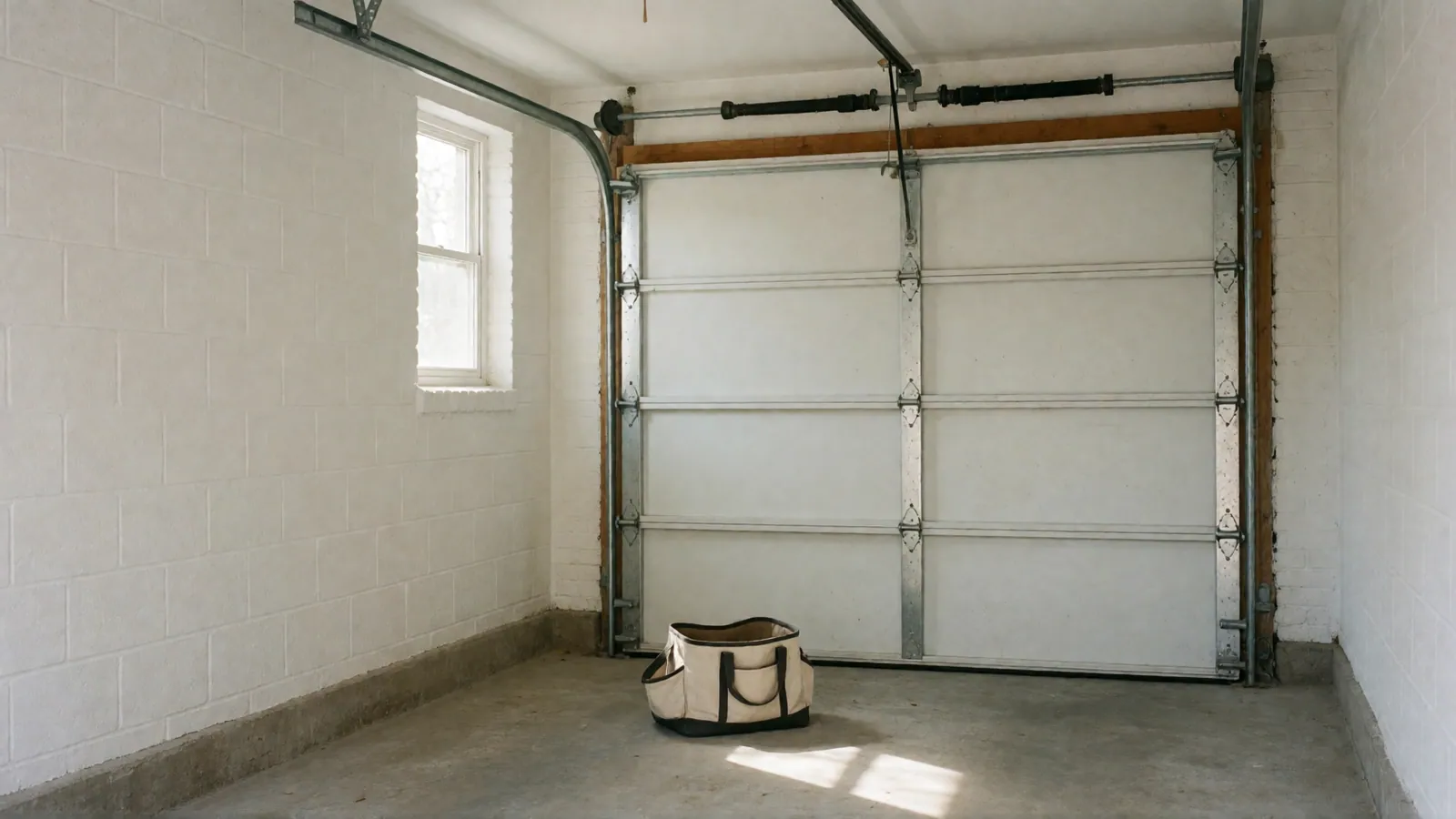
AI-generated illustration. Not a real home or business.
The visit, in six steps
A first visit takes about an hour: the door and its parts looked at, the balance tested with the opener disconnected by the technician, the opener's reversing test run, and a written price for the repair.
The call
The office calls to agree a working day and a time window for the visit. Until then, leave the door where it is if you have been told to stop using it.
The look
The technician looks at the springs, the cables, the tracks, the rollers and hinges, the sections and the opener, from the floor first.
The tests
With the opener disconnected by the technician, the door's balance is tested by hand; with it connected, the reversing test is run on something laid on the floor.
The written price
You get the price of the repair in writing, from the published prices, and decide. The first visit costs nothing, and you don't have to sign anything after it.
The contract and the three days
If you say yes, you sign a written contract and the notice about permits. In New York City the repair is done on a second visit, after the three business days to cancel are over.
The repair, tested
The repair is done, the balance and the reversing test are run again, and you watch the door open and close before the technician leaves.
Why it goes in this order
From the floor first, because a door tells most of its story before anybody touches it: a gap in a spring's coil, a cable off its drum, a roller out of its track, a section bent where a bumper met it. Nothing is lifted or run until it has been looked at.
Imogen Adeyemi-Kowal runs the company and does many of the repair visits herself. She tests the balance of every door before she says what it needs. The balance says whether the springs still match the weight of the door. It is a technician's test, done with the opener disconnected by the technician, because on a door whose spring may have gone the opener can be the only thing holding it up.
She writes the price down before she picks up a tool. The written price comes before any repair, and in this city the repair comes after the three business days, so what a first visit leaves you with is a price on paper.
 AI-generated illustration. Not a real person, home or business.
What is looked at
The check-first list for your door is a selection from these, in the order its symptom points to. New York's reversing test comes last wherever there is an opener.
The springs
Whether either is broken, and whether the door is balanced once the opener is disconnected by the technician.
The lift cables and drums
Both cables, from the drum at the top to the bracket at the bottom corner, for fraying, slack and how they sit in the grooves.
The tracks
Whether both are straight, upright and bolted tight, and the rollers sit in them all the way up.
The rollers and hinges
Worn bearings, cracked wheels, bent stems and loose hinge bolts, section by section.
The sections
Bends, cracks and the joints between them, and whether the door binds where a section is bent.
The safety sensors
Whether the two are lined up, clean and wired, and the reversing test with the opener.
The opener's settings
Its travel limits and its force setting, and the reversing test on something placed under the door.
The opener's drive
The motor's gear, the belt or chain, the carriage on the rail and the arm to the door.
The power
The outlet the opener plugs into, the breaker, and the wall control's lock switch.
The remotes and the keypad
Their batteries, and whether each is still programmed to the opener.
The seals
The rubber seal along the bottom, the weatherstrip at the sides and top, and whether the door closes flat on the floor.
The opener's reversing test, as New York requires
Run by anyone who works on a garage door, its springs or its tracks. If the opener fails it, a DANGER label goes on the opener and you get written notice within ten days.
The test New York asks of anyone who works on a door
New York's own law on garage door openers binds anyone who works on a garage door, its springs or its tracks: they test on site that the opener reverses, and if it fails they fix the law's DANGER label to it and give the owner written notice within ten days. Nobody may install an opener on a home without an automatic reverse and a safety sensor.
Leocadia Brandt-Osei repairs and fits openers, sensors and remotes. She runs the reversing test on every opener before she leaves. An opener that goes back up when it meets something is doing what it was built to do, and the test is how anybody knows it still does.
Before the visit
Clear the floor in front of the door and along both tracks.
If the check told you to stop using the door, leave it where it is.
Have the remotes to hand if the opener is part of the visit. Keep any keypad code to yourself: the technician does not need it.
Keep pets and children out of the garage while the technician works.
Say if the door was hit by a car, or if anybody has worked on it before.
In writing
After the visit
Before any repair you get its price in writing and a written contract to sign. Nothing is done until you say yes and the three business days to cancel are over.
In New York City every repair or installation at a house is a home improvement contract, whatever its price: written and signed before any work, with the license number, the work, the parts by make and model, the price, the dates, the payment terms, the notices the law requires, and a signed notice saying whether any permit is needed.
The first visit is never called an inspection: in New York a home inspection is a licensed activity, and its definition names garages. A technician looks at a door in order to price a repair, and says so.
Check your door
Try the symptom check: what would be looked at first, whether to stop using the door, and the published prices, in about two minutes. Sending it to us books nothing.