$290 to $360 for a one-car door
Broken spring repair
A torsion spring above the door or extension springs along the sides, replaced in pairs at a published price, and the door balanced again.
The first visit costs nothing, and you don't have to sign anything after it.
If someone is trapped or hurt, call 911. This website is not an emergency service.
37-32 61st Street, Woodside, NY 11377
Repairs
Both lift cables replaced, the drums and the bottom brackets checked, and the door set level again, at a published price.
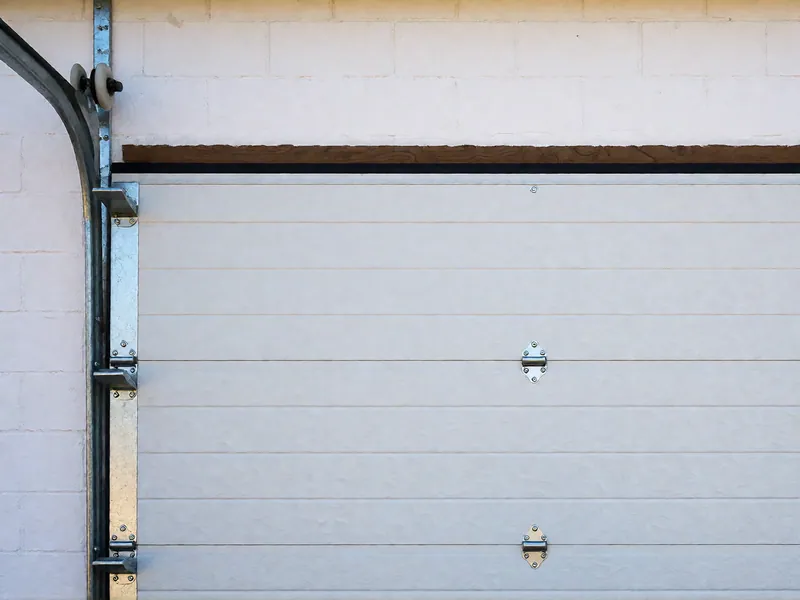
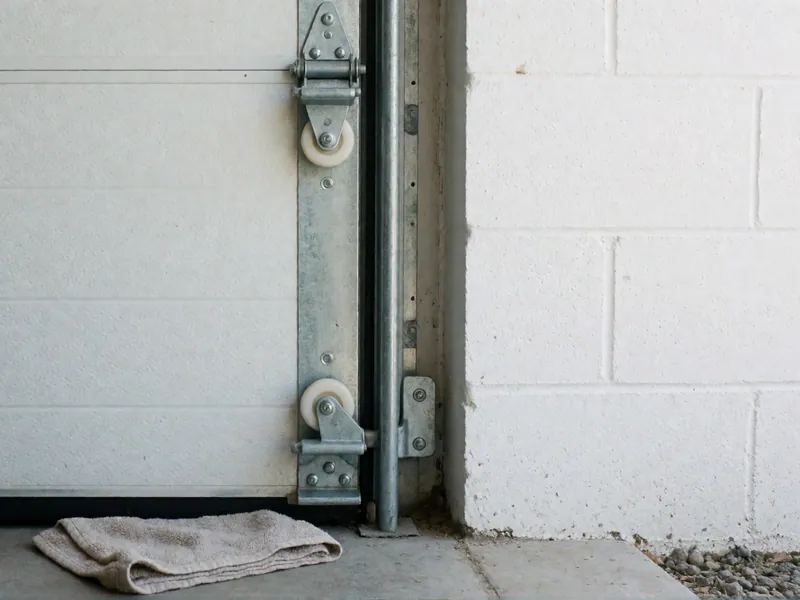
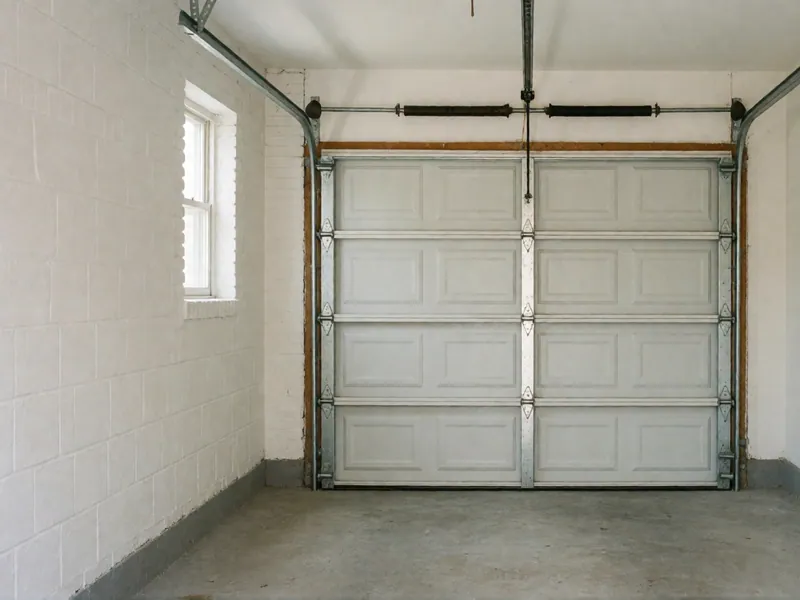
AI-generated illustration. Not a real home or business.
Stop using the door until it has been looked at. Don't run the opener, don't try to lift the door by hand, and don't pull the opener's red release cord: with a weak or broken spring the door can drop fast. Don't touch the spring, the cables or the brackets at the bottom corners of the door. Keep people, pets and cars out from under it.
A cable lying on the floor or swinging beside the track is easy to take for a small thing. It is not: the cable is how the springs' force reaches the door, and the end that has let go has let go of its share of the door's weight.
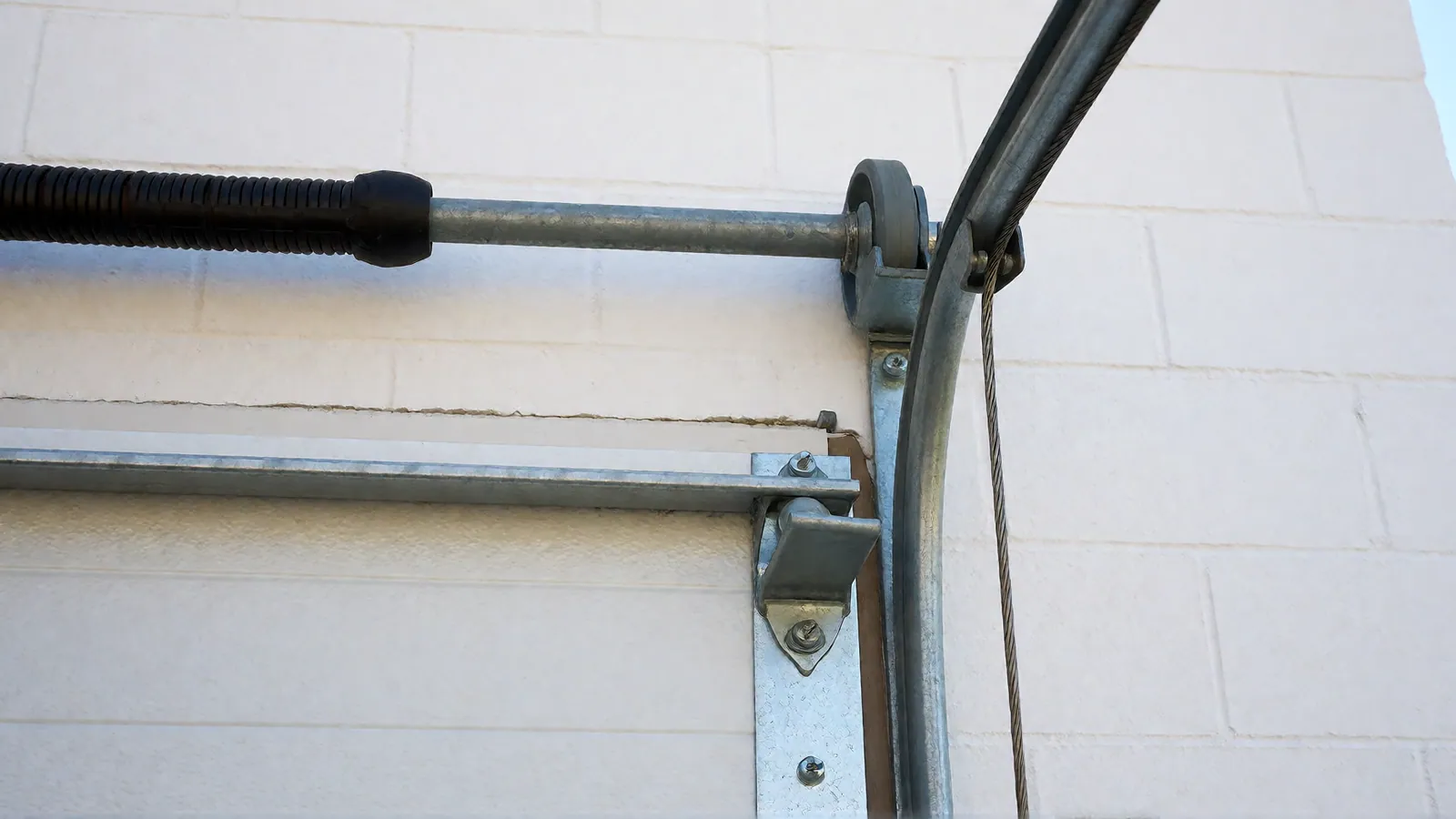
Each bottom corner of the door has a lift cable fixed to a bracket. On a door with torsion springs the cables run up beside the tracks to a drum at each end of the spring tube and wrap onto the drums as the door rises; on a door with extension springs they run through pulleys to the springs along the sides.
With both cables whole, the door rises level. When one breaks or slips off its drum, that side has nothing lifting it, the door tilts in its opening, and the rollers on the low side can be pulled out of the track.
The bracket at the bottom corner carries the cable's whole pull, which is why it is on the list of things nobody but a technician touches.
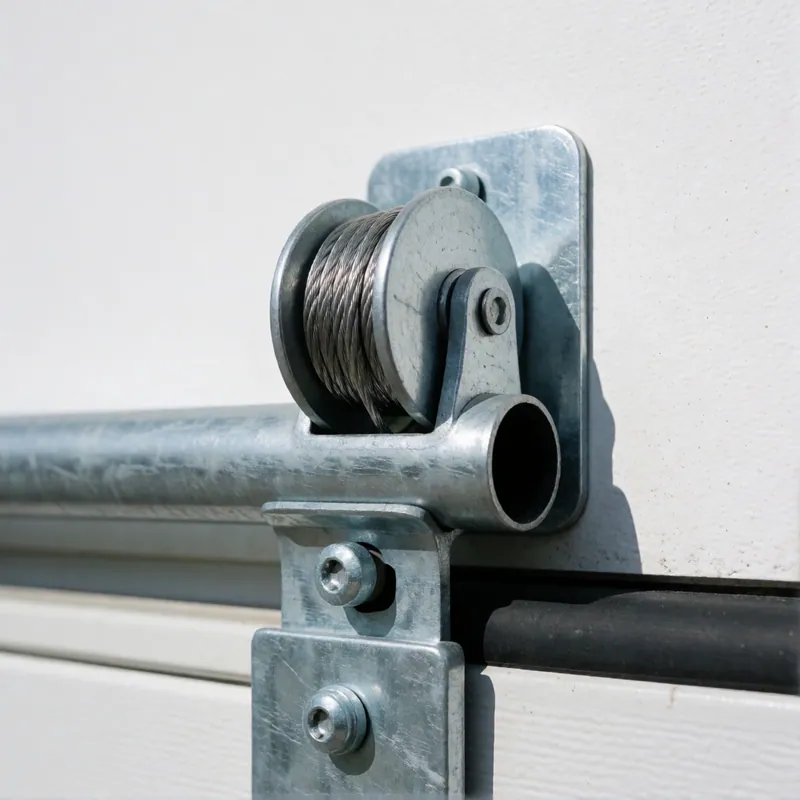 AI-generated illustration. Not a real home or business.
A cable frays where it rubs, rusts at the bottom where water sits, or goes slack and jumps its drum because a spring above it has broken. Both are replaced together, so the door hangs from two cables of the same length and the same wear.
For "A cable has snapped or is hanging loose", the symptom check answers "Stop using the door until it is seen" and lists what a technician looks at, in this order:
Both cables, from the drum at the top to the bracket at the bottom corner, for fraying, slack and how they sit in the grooves.
Whether either is broken, and whether the door is balanced once the opener is disconnected by the technician.
Whether both are straight, upright and bolted tight, and the rollers sit in them all the way up.
Run by anyone who works on a garage door, its springs or its tracks. If the opener fails it, a DANGER label goes on the opener and you get written notice within ten days.
If the door is stuck open, leave it where it is: don't try to close it, and keep everybody and everything out from under it. Say it is open when you send the enquiry, and the office calls you first.
New York lets work start at once only in a genuine emergency, such as a door stuck open that leaves the house unsecured, and only if you called the company yourself and you write out, by hand, a dated and signed statement describing the emergency and saying you give up your three days to cancel. Nobody should hand you a printed one, and it covers only the emergency repair, not anything else offered on the same visit. This website can't take that statement and never asks for it.
The table holds every line the symptom check can list for it, each at its published price for a one-car and a two-car door. The range the check gives runs from the least of them to all of them, because a door can need more than one at once.
| The prices | One-car door | Two-car door |
|---|---|---|
| A repair to a house is taxable in New York City, and 8.875% is added to it on its own line. | ||
| Both torsion springs replaced | $290 to $360 | $360 to $420 |
| Both extension springs replaced, with their safety cables | $195 to $235 | $235 to $275 |
| Both lift cables replaced | $175 | $175 to $195 |
| The door set back on its tracks, a bent track replaced if it has to be | $225 to $365 | $225 to $365 |
A price covers the parts and the work, the old parts taken away, and the balance and the reversing test run again before the technician leaves. It does not cover electrical work, such as a new outlet for an opener, which a licensed electrician does.
$290 to $360 for a one-car door
A torsion spring above the door or extension springs along the sides, replaced in pairs at a published price, and the door balanced again.
$225 to $365 for a one-car door
A crooked door or one that has jumped its track, set back on straightened tracks with its rollers and cables checked, at a published price.
$145 for a one-car door
Every moving part looked at, the balance tested, the hinges and rollers lubricated, and the opener's reversing test run, at a published price.
Try the symptom check: what would be looked at first, whether to stop using the door, and the published prices, in about two minutes. Sending it to us books nothing.