The first visit costs nothing, and you don't have to sign anything after it.
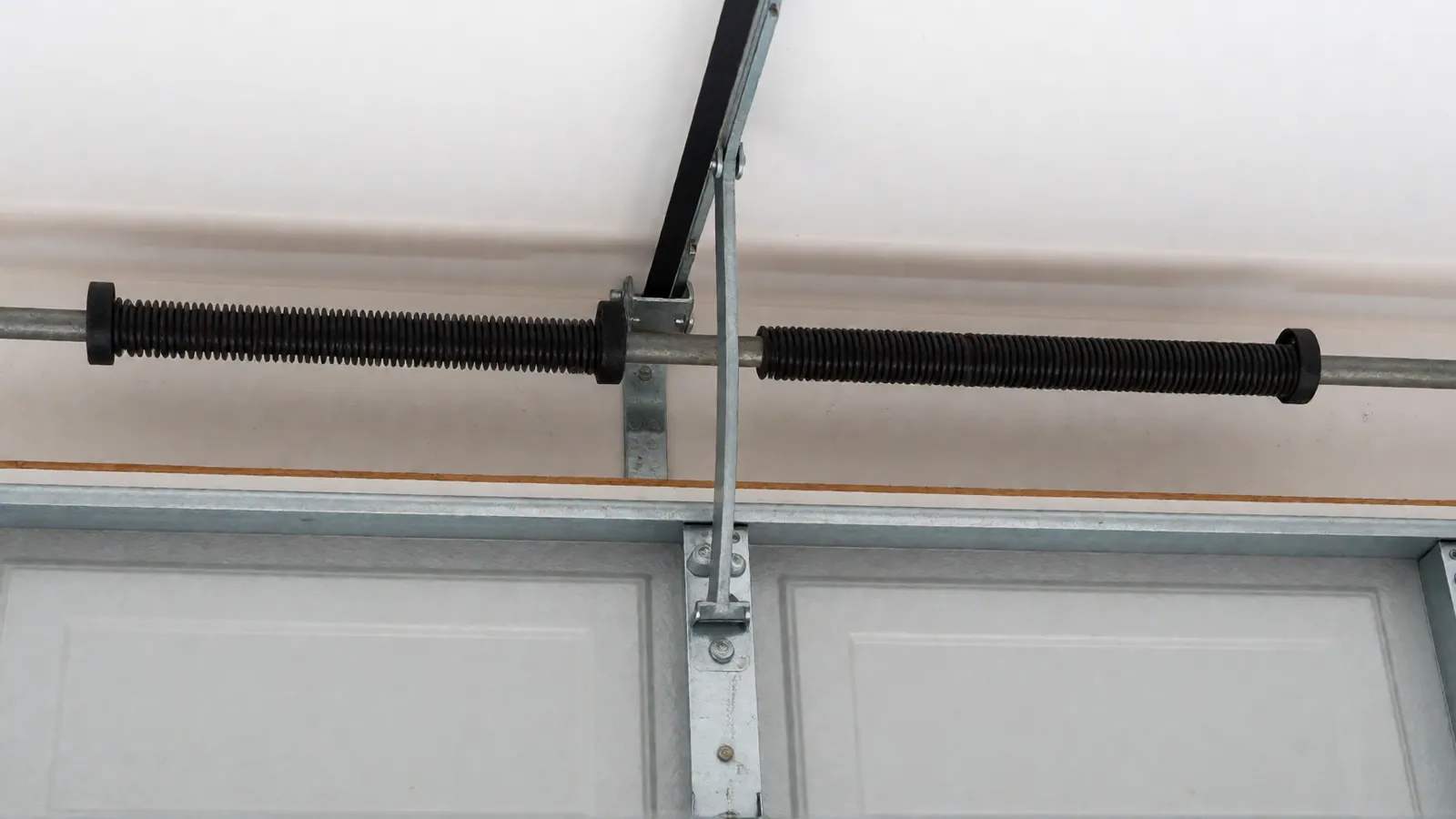
Close above the top of a closed white garage door from inside: two dark torsion springs on a steel tube, and between them a steel arm running from a bracket on the door's top section up to the opener's rail, which leaves the frame.

Repairs

An opener that hums, reverses or won't respond, looked at in order

The power, the sensors, the settings and the drive, in that order, and the reversing test before the technician leaves.

  • $135 to $265 for a one-car door
  • Queens only

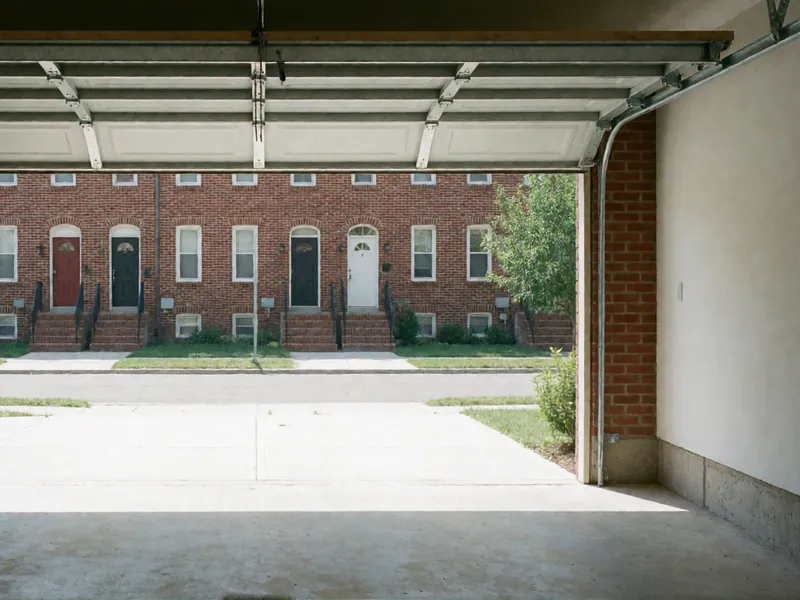
AI-generated illustration. Not a real home or business.

Looked at in order

An opener is a motor on the ceiling or the wall, a drive that carries the door, a pair of sensors near the floor, and the controls: the wall button, the remotes, the keypad. When something goes wrong, the trouble is as often in the power or the sensors as in the motor, and as often in the door as in the opener.

So the technician starts with the power and the sensors and works toward the drive, and the order changes with what the door is doing.

  • The sensors are never bypassed.
  • The reversing test, every time.
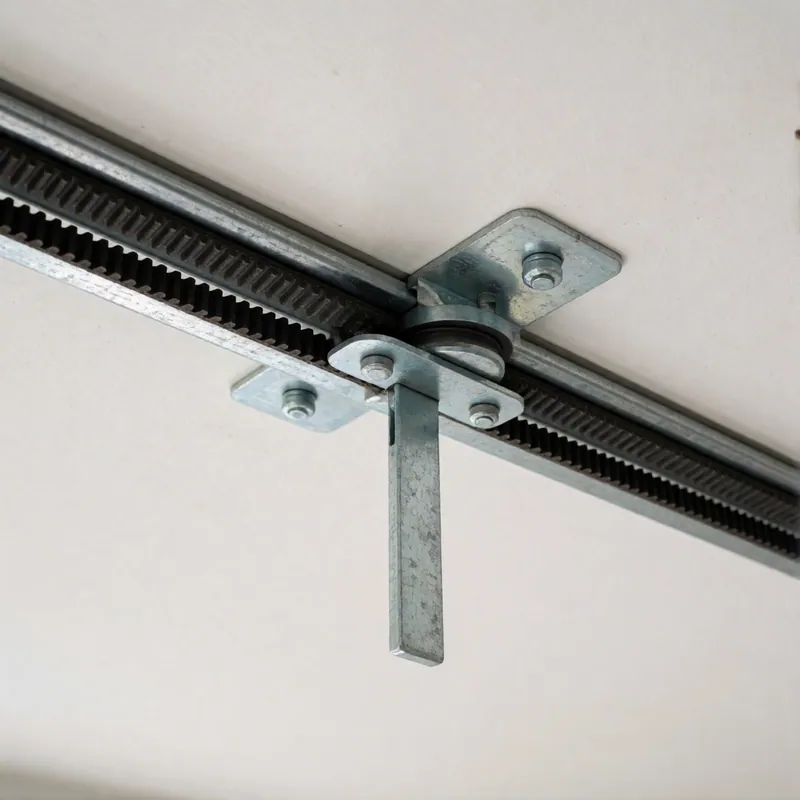
Close under a garage ceiling: a steel opener rail with a black toothed belt and a small flat steel carriage on it, a straight steel bar hanging down from the carriage.AI-generated illustration. Not a real home or business.

What the door is doing, and what comes first

These are the symptom check's own answers for an opener: whether to go on using the door, and the parts a technician looks at, in order.

  • Nothing happens at all when I press the button

    Use it with care until the visit. Looked at first: the power, the opener's drive and the remotes and the keypad.

  • The wall button works, but a remote or the keypad doesn't

    Use it with care until the visit. Looked at first: the remotes and the keypad and the power.

  • It won't close with the remote, and the opener's light flashes

    Use it with care until the visit. Looked at first: the safety sensors and the opener's settings.

  • It starts to close, then goes back up

    Use it with care until the visit. Looked at first: the safety sensors, the opener's settings, the tracks and the rollers and hinges.

  • It doesn't go back up when it touches something under it

    Stop using the door until it is seen. Looked at first: the opener's settings, the safety sensors and the opener's drive.

  • The opener hums or runs, but the door barely moves

    Stop using the door until it is seen. Looked at first: the springs, the opener's drive and the opener's settings.

  • It opens a little, then stops or goes back down

    Stop using the door until it is seen. Looked at first: the springs, the opener's settings and the rollers and hinges.

On every one of them, the opener's reversing test, as New York requires comes last.

Two of them stop the door, and the springs head both lists. An opener that hums while the door barely moves, or a door that opens a little and goes back down, is often a door too heavy for its springs, and the opener is only the part that shows it.

What can be checked before anybody comes

Some symptoms come from something an owner can check first without going near a spring or a cable, and the opener's own manual asks you to: a sensor lens with dust on it, a box in the sensors' beam, an opener unplugged, a wall control's lock switched on, a remote's flat battery. The check lists those where they apply, and none for a door it has told you to stop using.

  • Check that the opener is plugged in and that the breaker for the garage has not tripped.
  • Check that the wall control's lock or vacation switch is off.
  • Put a new battery in the remote.
  • Wipe the two sensors' lenses with a soft dry cloth.
  • Move anything standing between the two sensors, even a leaf or a box on the floor between them.
  • If the light still flashes, leave the door closed or open as it is and wait for the visit; don't hold the wall button down to force it.

Those are the whole list. Anything past them, from the force setting to the drive, is the technician's.

Why it goes back up, and why the sensors stay

Since 1993, every home garage door opener made for sale in the U.S. has had to reverse within two seconds when it touches something, and to work with a safety device such as the two small sensors near the floor, which it checks every time it closes. That is why an opener refuses to close when a sensor is blocked or out of line, and why we never bypass, bridge or remove the sensors, or turn the force up to make a door close.

A door that reverses as it closes is usually doing what it was built to do: something is in the beam, a lens is dirty or knocked out of line, or the door meets more resistance than the opener expects. The answer is to find which, not to stop the opener checking.

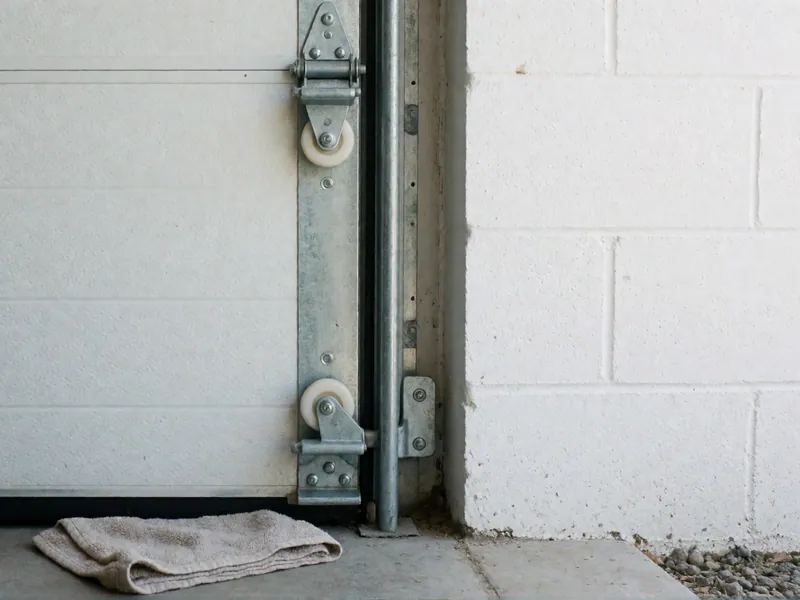
A plain canvas tool bag with handles standing on a gray concrete floor against a white block wall.AI-generated illustration. Not a real home or business.

Leocadia Brandt-Osei

Opener technician

Repairs and fits openers, sensors and remotes.

Leocadia runs the reversing test on every opener before she leaves.

Leocadia will not turn an opener's force up to make a door close.

The picture is a still of the tools, not a portrait.
The law on openers, and the ones that are replaced

New York's own law on garage door openers binds anyone who works on a garage door, its springs or its tracks: they test on site that the opener reverses, and if it fails they fix the law's DANGER label to it and give the owner written notice within ten days. Nobody may install an opener on a home without an automatic reverse and a safety sensor.

An opener that doesn't reverse can't lawfully be repaired in New York unless the repair makes it reverse, so the price range includes replacing it. Until it is seen, don't use the opener.

An opener made before 1993 was not built with the second means of protection the federal rule now requires, such as the sensors near the floor, and many no longer reverse. In New York an opener that doesn't reverse may be serviced only if the service makes it reverse, and one without a sensor could not be installed today. It is priced here for replacing.

That is why the symptom check prices a new opener as well wherever the opener does not reverse, has no sensors, or comes from before the federal rule.

The price

The table holds every line the symptom check can list for these symptoms, each at its published price for a one-car and a two-car door. The range the check gives runs from the least of them to all of them, because a door can need more than one at once.

Every repair has a published price for a one-car door and for a two-car door, and it is the whole price of the job: there is no call-out or visit charge on top. The first visit costs nothing, and you don't have to sign anything after it. Sales tax is worked out line by line.
The pricesOne-car doorTwo-car door
A repair to a house is taxable in New York City, and 8.875% is added to it on its own line.
Adjusting and lubricating, nothing replaced$75$95
Both torsion springs replaced$290 to $360$360 to $420
Both extension springs replaced, with their safety cables$195 to $235$235 to $275
Every roller replaced$165$195
A new pair of safety sensors$160$160
The opener's gear, drive or control board repaired$135 to $265$135 to $265
A new remote, programmed$55$55
A complete new door or a complete new opener installed is a capital improvement: no sales tax is charged on that line when you sign New York's capital improvement certificate, Form ST-124, which you sign and give to the company with the contract.
A new ceiling opener with a belt rail, installed$625$625

A price covers the parts and the work, the old parts taken away, and the balance and the reversing test run again before the technician leaves. It does not cover electrical work, such as a new outlet for an opener, which a licensed electrician does.

Related services

Check your door

Try the symptom check: what would be looked at first, whether to stop using the door, and the published prices, in about two minutes. Sending it to us books nothing.