
The first visit costs nothing, and you don't have to sign anything after it.
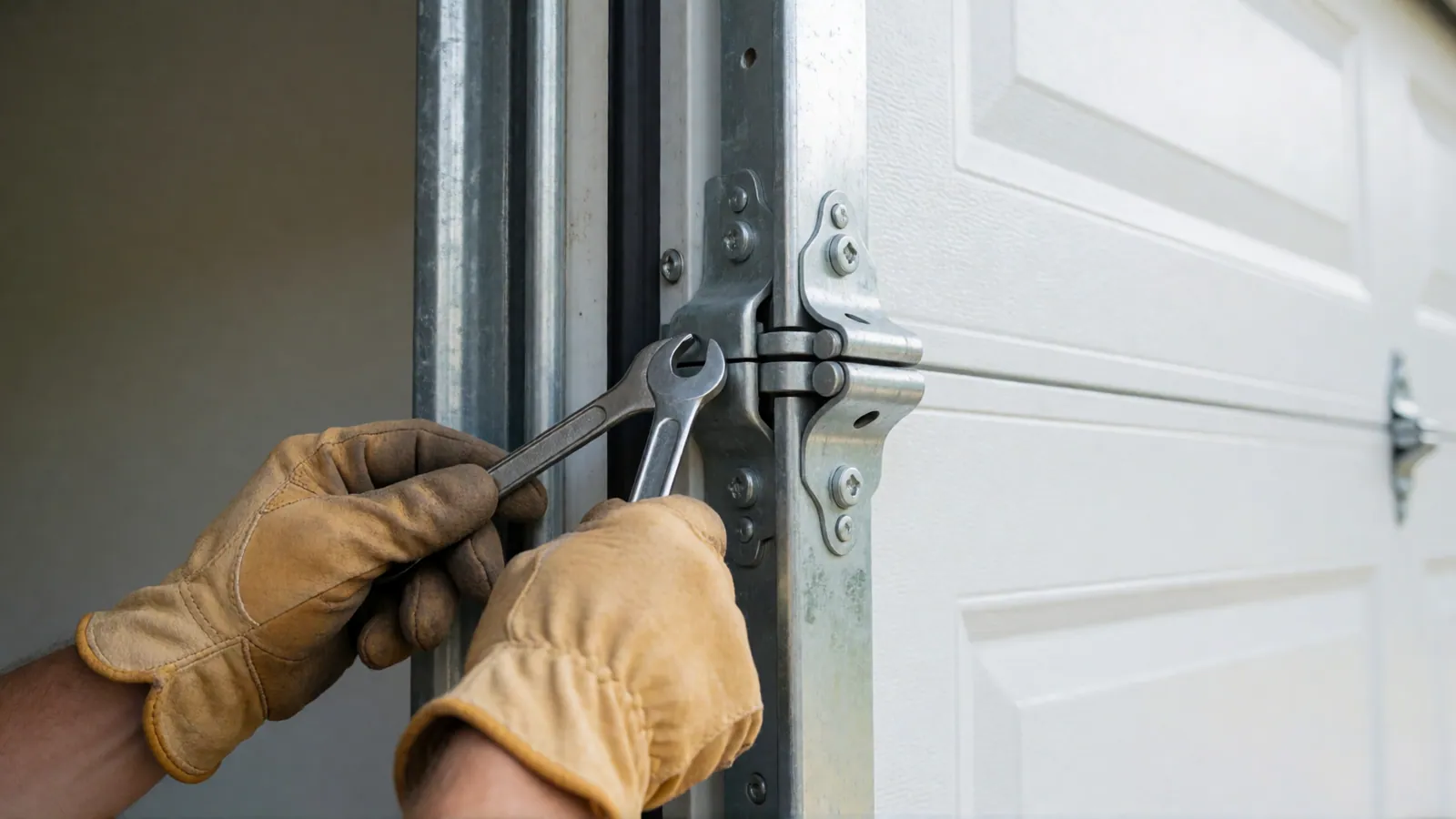
Close on the inside edge of a closed white steel garage door: a pair of hands in tan leather work gloves, the forearms bare, tightening a bolt on a galvanized hinge with a wrench, beside the upright track.

How it works

The door tested again, and what happens if something is wrong

The balance and the reversing test are run again with you watching, before the technician leaves, so anything wrong is said while everybody can see it.

  • Tested again with you watching
  • The written price is the promise

AI-generated illustration. Not a real person, home or business.

Before the technician leaves

The repair is done, the balance and the reversing test are run again, and you watch the door open and close before the technician leaves.

That last part is yours. Watch the door all the way up and all the way down, and watch the reversing test: the door should stop on what is laid on the floor and go back up. If it hesitates, catches or sounds wrong, say so then, while the technician and the tools are still in the garage.

A price covers the parts and the work, the old parts taken away, and the balance and the reversing test run again before the technician leaves. It does not cover electrical work, such as a new outlet for an opener, which a licensed electrician does.

A plain canvas tool bag with handles standing on a gray concrete floor against a white block wall.AI-generated illustration. Not a real home or business.

Leocadia Brandt-Osei

Opener technician

Repairs and fits openers, sensors and remotes.

Leocadia runs the reversing test on every opener before she leaves.

Leocadia will not turn an opener's force up to make a door close.

The picture is a still of the tools, not a portrait.

If the door goes wrong afterwards

If you hear a bang or the door feels heavy, stop using it and call.

Then tell the office what it did and when, and say which visit it follows. The written price and the contract say what was done, so the door is looked at against them rather than from the start.

If the opener fails New York's test

Anyone who works on the door has to run it, so a failed test is never kept from you.

New York's own law on garage door openers binds anyone who works on a garage door, its springs or its tracks: they test on site that the opener reverses, and if it fails they fix the law's DANGER label to it and give the owner written notice within ten days. Nobody may install an opener on a home without an automatic reverse and a safety sensor.

An opener that doesn't reverse can't lawfully be repaired in New York unless the repair makes it reverse, so the price range includes replacing it. Until it is seen, don't use the opener.

If something is damaged

If a technician damages something in your garage or your house, tell them the same day; the written price or the contract says how it is put right. This demonstration company has no insurance to call on, which is one more reason a real one names its insurer.

Take a picture of it before anything is moved, and show it to the technician before they leave. A scrape found that afternoon is something you both saw; one found a week later is an argument.

Promises, and where they are written

In the written price and the contract, and nowhere else.

We promise what is in writing: the work, the parts, the price and the dates. We don't offer a warranty of our own, a lifetime anything or a guarantee of satisfaction. Springs, openers and doors carry their makers' warranties, whose terms the makers write.

A real contractor's paperwork should keep two promises apart: the maker's warranty on a part, written by the maker, and the contractor's own promise about its work. In New York City a contractor who advertises a guarantee must put its terms in the ad and in the contract, and may not offer a lifetime one; a spring sold as "lifetime" is a promise about the part, from its maker, if anyone.

A change once the work is agreed

A second part turns out to be worn, or you decide on a new door after all.

After the three days, a contract can still be changed or ended by agreement; a change is written down and signed as a change order before the work it changes is done.

Check your door

Try the symptom check: what would be looked at first, whether to stop using the door, and the published prices, in about two minutes. Sending it to us books nothing.