Limits
How these pictures were made
Each picture here was made from a description and carries a label saying so. None shows a face, a maker's name, anything a visitor could read, or a real house.
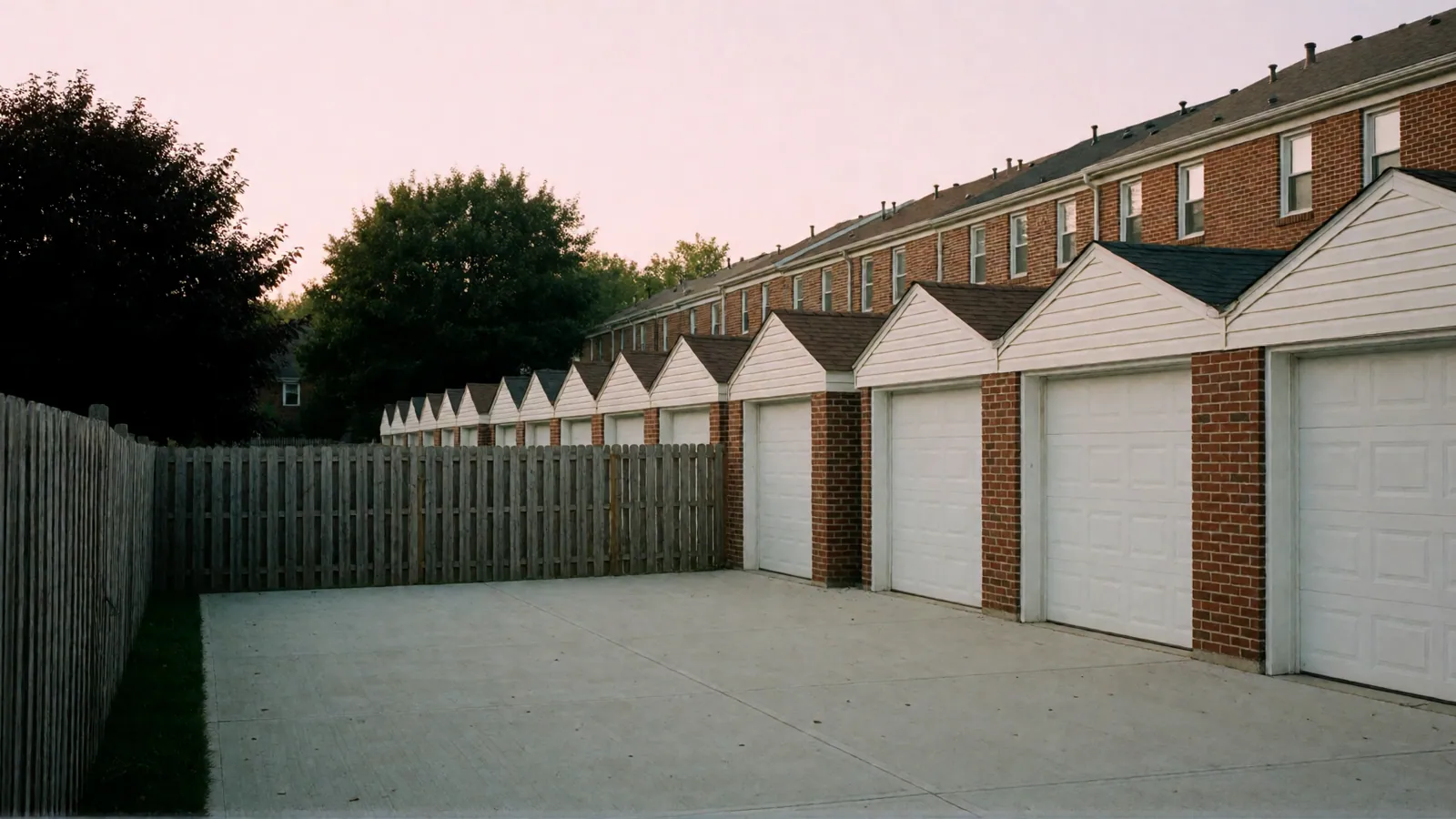
AI-generated illustration. Not a real home or business.
Made from descriptions, not photographed
This garage door company is invented, so there is no crew to photograph, no garage it has worked in and no owner who let it through the side door. Every picture on the site was made from a written description by an image model, and each one says so where it appears.
Every picture on this site was generated. Most have nobody in them; two show a technician's gloved hands and forearms, never a face, and are labeled as generated people. No opener, remote, spring or door in any of them carries a maker's name or a label anybody could read, and nobody is shown under a door or near a spring.
- We do not show a real person in a picture: every picture here is generated and says so.
The six rules the pictures keep
Each rule decided what a description asked for and what it kept out of the frame, and each picture was looked at before it was used.
No face in any picture
Most pictures have nobody in them. Two show a technician's gloved hands and forearms, never a face, and carry the label for a generated person.
Nobody under a door, nobody near a spring
No one is shown under a door, open or closed, or on a ladder, and no hand is anywhere near a spring, a cable or a bottom bracket. A spring is shown with nothing and nobody near it.
No maker's name on anything
A real opener carries its maker's logo and a real remote its printed buttons, so no opener's motor unit, remote, keypad or wall button is in any picture: an opener is shown by its rail and its arm.
No van, truck or car
Each carries a name or lettering, and a car's shape names its maker. Every driveway is empty, and there is no house number or street sign.
Queens houses, as they are
Attached brick houses with short driveways down to garages under the house, small garages behind row houses on shared driveways, chain-link fences and street trees, and no skyline anybody could name.
Every picture labeled
Every picture carries the label "AI-generated illustration. Not a real home or business.", or with a person in it "AI-generated illustration. Not a real person, home or business.".
The two labels
AI-generated illustration. Not a real home or business.
On every picture of a garage, a door, a street or a tool. A made-up row of brick houses can look exactly like the block you live on, and the label says the garage in it is nobody's, and no job this company did.
AI-generated illustration. Not a real person, home or business.
On the few pictures with a technician's gloved hands in them. The hands belong to nobody, and the label says so on the picture itself.
A page's header picture carries its label in a line under the heading. Every other picture carries it on the picture, and none appears without one.
Why there is a label at all
Each read against its source in October 2026.
- N.Y. General Business Law § 396-b (opens the source in a new tab) An advertisement that uses a generated person says so conspicuously.
- N.Y. General Business Law § 350 (opens the source in a new tab) False advertising in the conduct of any business is unlawful in New York.
The first rule is about made-up people, and the pictures with a technician's hands in them carry the label for one. Every other picture carries a label for the plainer reason behind the second: a made-up garage with a new door in it is easy to take for a finished job, and somebody choosing a company should never be shown work that was not done without being told so.
Why nothing in them can be read
The commonest pictures on a garage door site are an opener on a ceiling, a remote in a hand and a lettered van at the curb. Each of those is an advertisement for whoever made it: an opener carries its maker's mark on its motor unit, a remote its printed buttons, and a van its lettering. This site names no maker, so its pictures cannot show one either, and an opener appears only by its rail and the arm that reaches down to the door.
Anything legible on a company's site reads as a claim. Lettering on a van looks like a company with a license behind it, a sticker on a spring looks like a brand, and a number on a house looks like a real address. So there is no vehicle and no house number in any frame, and the people are never shown by their faces, because a face would be a person who does not exist.
Nobody is shown under a door or with a hand near a spring, for the same kind of reason: a picture is a promise about how the work is done, and this site tells every owner to keep out from under a door and away from its springs.
A real company built from this design would show its own technicians and its own finished doors, photographed as they are, and nothing a visitor could take for a badge, a brand or a promise it does not keep.
Check your door
Try the symptom check: what would be looked at first, whether to stop using the door, and the published prices, in about two minutes. Sending it to us books nothing.