A symptom check that stops where it should
The check never tells you a door is safe. It has not seen it. It can only tell you when to stop using it, and it does that for every symptom a broken spring or a snapped cable can cause.
The first visit costs nothing, and you don't have to sign anything after it.
If someone is trapped or hurt, call 911. This website is not an emergency service.
37-32 61st Street, Woodside, NY 11377

Railwick Garage Doors · 37-32 61st Street, Woodside, Queens
Springs, cables, tracks and openers put right at a published price for a one-car or a two-car door, and new openers and insulated steel sectional doors put in. The visits, the written prices and the paperwork are all arranged from an office on 61st Street in Woodside.
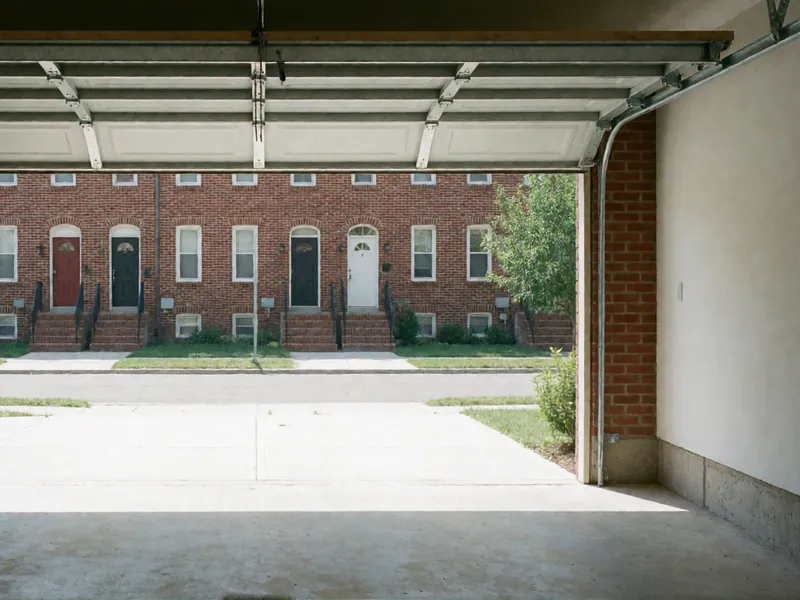
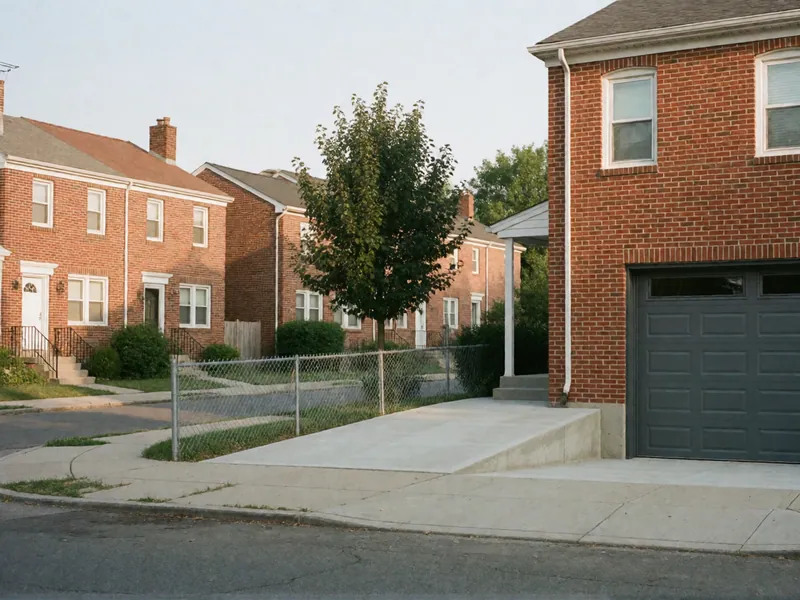
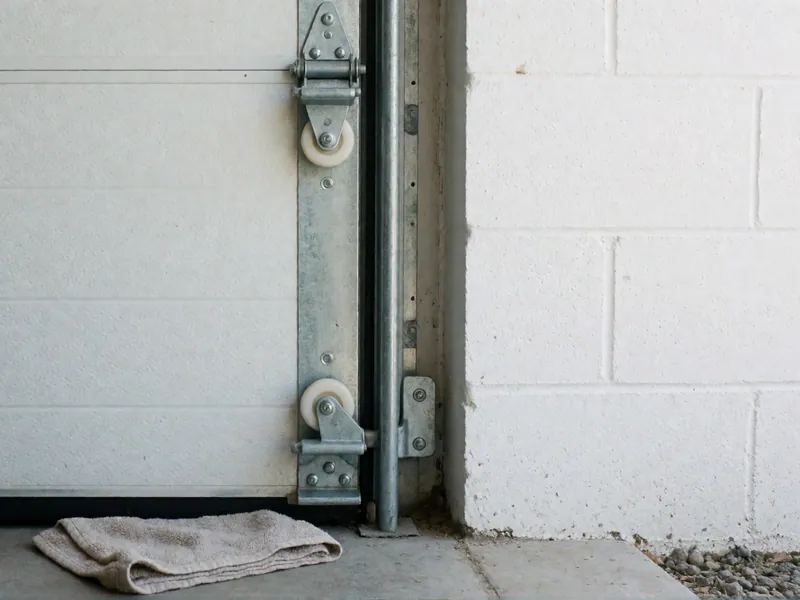
AI-generated illustration. Not a real home or business.
What we do
Railwick Garage Doors repairs garage doors at Queens houses, fits new openers and puts in new doors, and does in the open what is usually left for the visit. Each of these has a page that says how.
The check never tells you a door is safe. It has not seen it. It can only tell you when to stop using it, and it does that for every symptom a broken spring or a snapped cable can cause.
There is no service-call charge to start with and no low price that grows at the door. The first visit costs nothing, and you don't have to sign anything after it; every price on this site is the whole price of the job; and New York City forbids extra charges used to disguise a selling price.
Every repair here is a written contract with three business days to cancel, and the repair waits for them, with one handwritten exception the site explains and never asks for. Every opener is put through its reversing test by whoever works on the door.
The door looked at from the floor first, the balance and the opener's reversing test, a written price, and the repair on a second visit, tested again before the technician leaves.
A garage door is part of what keeps a house shut, so nothing here asks for anything that would help a stranger open it: no street address, no codes, no times the house is empty. The reply to an enquiry is the same whether or not your address has written before.
The company is invented, so it shows no license number, no insurance, no maker's badge and no reviews, and each page that says so tells you what a real company has to show you instead.
Springs, cables, tracks and openers
Published prices, a written price before the work.
A garage door is a heavy thing held up by its springs, kept straight by its tracks and moved by its opener. When one of them gives out, the others take the strain, which is why a door that banged, dropped or went crooked is left where it is until someone has looked.
$290 to $360 for a one-car door
A torsion spring above the door or extension springs along the sides, replaced in pairs at a published price, and the door balanced again.
$175 for a one-car door
Both lift cables replaced, the drums and the bottom brackets checked, and the door set level again, at a published price.
$225 to $365 for a one-car door
A crooked door or one that has jumped its track, set back on straightened tracks with its rollers and cables checked, at a published price.
$135 to $265 for a one-car door
The power, the sensors, the settings and the drive, in that order, and the reversing test before the technician leaves.
Checked here, looked at and tested at your door, written down, and then three business days before the repair. Sending the check arranges nothing by itself: the office calls or writes to agree a day.
The symptom check turns what your door is doing into what would be looked at first, whether to stop using it, and the published prices of what it could need. It takes about two minutes.
Sending the symptom check to us is an enquiry, not a booking. It holds no date and commits you to nothing. We call or e-mail by the end of the next day the office is open, to arrange the first visit.
A first visit takes about an hour: the door and its parts looked at, the balance tested with the opener disconnected by the technician, the opener's reversing test run, and a written price for the repair.
Before any repair you get its price in writing and a written contract to sign. Nothing is done until you say yes and the three business days to cancel are over.
Done on a second visit after the three days, and tested again with you watching before the technician leaves.
A worked example
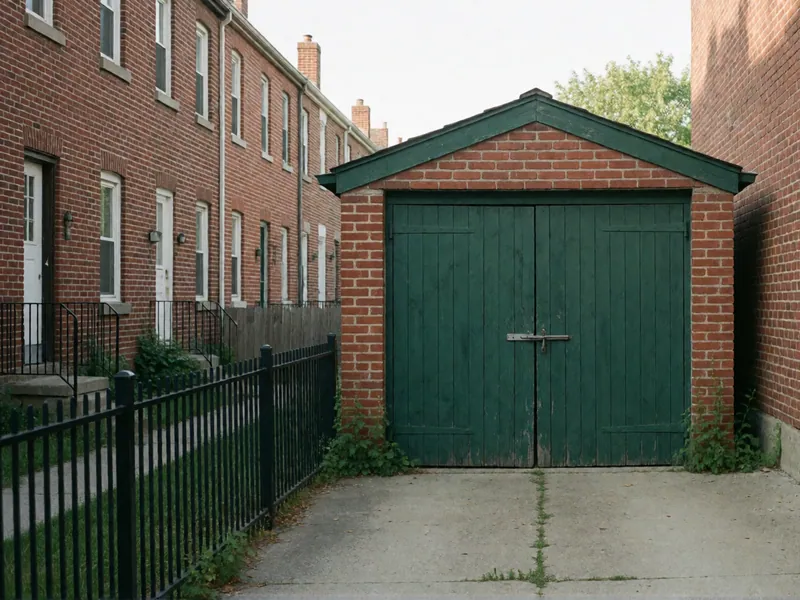
This is the symptom check's answer for a one-car door under an attached brick house in Woodside: a loud bang, and the opener struggles.
It answers the question of using the door before anything else, because a bang like that is how a torsion spring usually goes, and a door whose spring has gone can come down hard. It offers nothing to check yourself first: there is nothing about a broken spring that an owner should go near.
The springs are first on its list and New York's reversing test is last, because the opener is part of the door and whoever works on the door tests it.
The low end of the range is its smallest line, both lift cables replaced, the least a bang could turn out to need; the high end is every line at once, because a door can need more than one of them.
A worked example: a symptom check
A loud bang, and the opener struggles A one-car door under an attached brick house in Woodside
Use the door?
Stop using the door until it is seen
Stop using the door until it has been looked at. Don't run the opener, don't try to lift the door by hand, and don't pull the opener's red release cord: with a weak or broken spring the door can drop fast. Don't touch the spring, the cables or the brackets at the bottom corners of the door. Keep people, pets and cars out from under it.
The opener's release cord disconnects the door from the opener. On a door with a broken spring it takes away the only thing holding the door up, so it is never pulled on a door that may have one.
Check-first list
What a technician looks at for what you describe, in the order they look. It names no fault: nobody has seen the door.
What you can check yourself first
Nothing: leave it for the technician.
Price range at our published prices
From the least it could need to everything listed. A written price is given at the first visit, and the repair is done after the three business days to cancel.
The symptom check's answer to these questions, at the published prices. Nobody has seen your door.
Prices
Every repair has a published price for a one-car door and for a two-car door, and it is the whole price of the job: there is no call-out or visit charge on top. Where the part or the work varies, the price is a range: a heavier door takes heavier springs, and a bent track or a worn drive can need more parts than another. Both ends are printed the same size. The prices are the same for every customer on every day.
Sales tax is worked out line by line. A repair to a house is taxable in New York City, and 8.875% is added to it on its own line. A complete new door or a complete new opener installed is a capital improvement: no sales tax is charged on that line when you sign New York's capital improvement certificate, Form ST-124, which you sign and give to the company with the contract.
New doors and openers
Measured first, a written contract.
$625
A ceiling opener with a belt rail, or one on the wall beside the door, fitted to a door that is balanced, with its sensors set.
$1,650 to $1,950 for a one-car door
An insulated steel sectional door made to the opening, measured first, the old door and its springs taken away on the day.
$145 for a one-car door
Every moving part looked at, the balance tested, the hinges and rollers lubricated, and the opener's reversing test run, at a published price.
$475 for a one-car door
A section bent by a car or cracked with age, replaced where a match can be had, or a new door when it cannot.
Seen first
One-piece doors that tilt up and out, and pairs of doors that swing like gates, seen first, with a new sectional door as the priced choice.
Priyanka Halvorsen-Mbeki measures openings for new doors and orders them. She measures the headroom twice, because a door that does not fit the space above it does not fit. A sectional door rolls back under the ceiling, so it needs room above the opening, beside it and behind it, and the order is placed only once all of that has been measured.
A one-piece door or a pair of swing doors is not planned online: what holds each of them up differs from door to door, so they are seen first.
The team
Six people run this company: an owner who does many of the repair visits, an office coordinator, someone who measures and orders new doors, a spring and cable technician, an opener technician and an install crew lead. None of them is described here by a license, a certification, a course or years in the trade: the law says what a real company must hold, and these pages say what each of these people does.
 AI-generated illustration. Not a real home or business.
Owner, repair visits
Runs the company and does many of the repair visits herself.
Imogen tests the balance of every door before she says what it needs.
Imogen writes the price down before she picks up a tool.
The picture is a still of the tools, not a portrait.
 AI-generated illustration. Not a real home or business.
Spring and cable technician
Replaces springs and cables and sets doors back on their tracks.
Matteo replaces springs in pairs, so the door does not wait for the other one to go.
Matteo leaves the door closed and the springs at rest whenever he is not working on them.
The picture is a still of the tools, not a portrait.
 AI-generated illustration. Not a real home or business.
Opener technician
Repairs and fits openers, sensors and remotes.
Leocadia runs the reversing test on every opener before she leaves.
Leocadia will not turn an opener's force up to make a door close.
The picture is a still of the tools, not a portrait.
Where we stop
Garage door sites in Queens are full of claims no company could back. Each of these pages prints one of them in a frame, says why this site leaves it out, and links the rule behind it.
This is a demonstration website. Woodside Railwick Garage Doors, LLC is a fictional garage door company and has no connection with any real company in Woodside, in Queens or anywhere else; "Woodside" is the house name of a set of demonstration companies. Its people, its jobs and its customers are invented, it holds no license, registration, certification or insurance of any kind, no one will call or come, and nothing sent here will be charged. Every picture on the site was generated. It was built to show what a garage door company's own website and enquiry system can look like; the symptom check and the enquiry form genuinely work, against a database, on this subdomain.
Try the symptom check: what would be looked at first, whether to stop using the door, and the published prices, in about two minutes. Sending it to us books nothing.