The first visit costs nothing, and you don't have to sign anything after it.
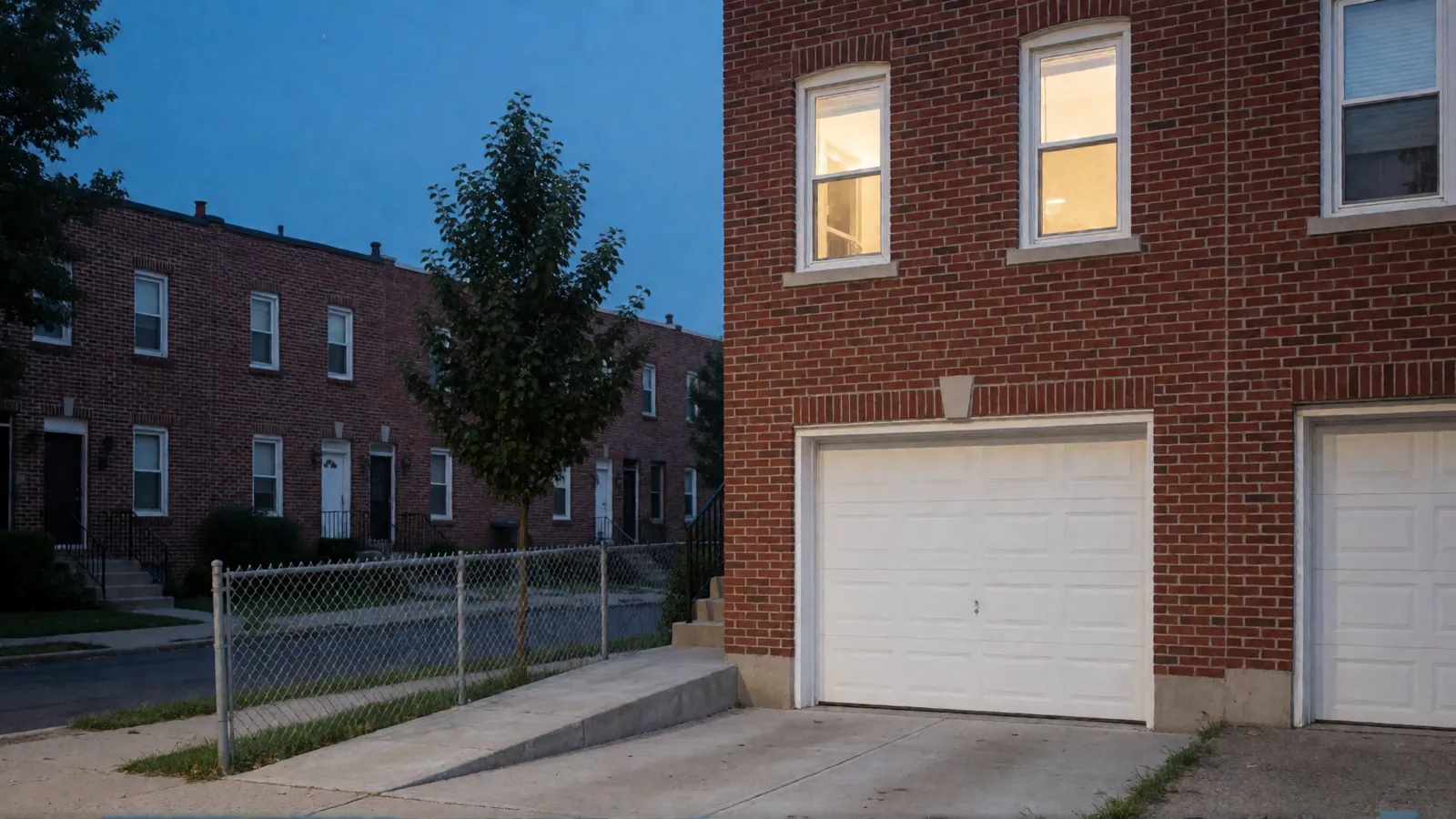
A closed white garage door under a red-brick house at dusk, warm light in two upstairs windows, a short driveway down from the sidewalk past a chain-link fence, a row of brick houses across the street under a deep blue sky.

How it works

After the repair: what to watch, and what to leave alone

A month-by-month habit, a few checks an owner can make, and the parts that stay a technician's however simple they look.

  • A test once a month
  • The springs left alone

AI-generated illustration. Not a real home or business.

After the work

Five habits for the weeks after a repair, and why they matter.

  1. Watch the door close all the way the first few times.

  2. Keep the sensors' lenses clean and nothing stored in their beam.

  3. Once a month, test that the door reverses when it meets something laid flat on the floor, but never if a spring or a cable might be broken.

  4. If you hear a bang or the door feels heavy, stop using it and call.

  5. Leave the springs, the cables and the bottom brackets to a technician, always.

The first few closes after a repair are when anything new about how the door moves is easiest to notice, because the work is fresh in your mind and the technician's.

The sensors are the part an owner looks after most: a lens with dust or a cobweb on it, or a bin stood in the beam, is often why a door refuses to close.

A bang, or a door that suddenly feels heavy, means the same after a repair as before one, and the answer is the same too.

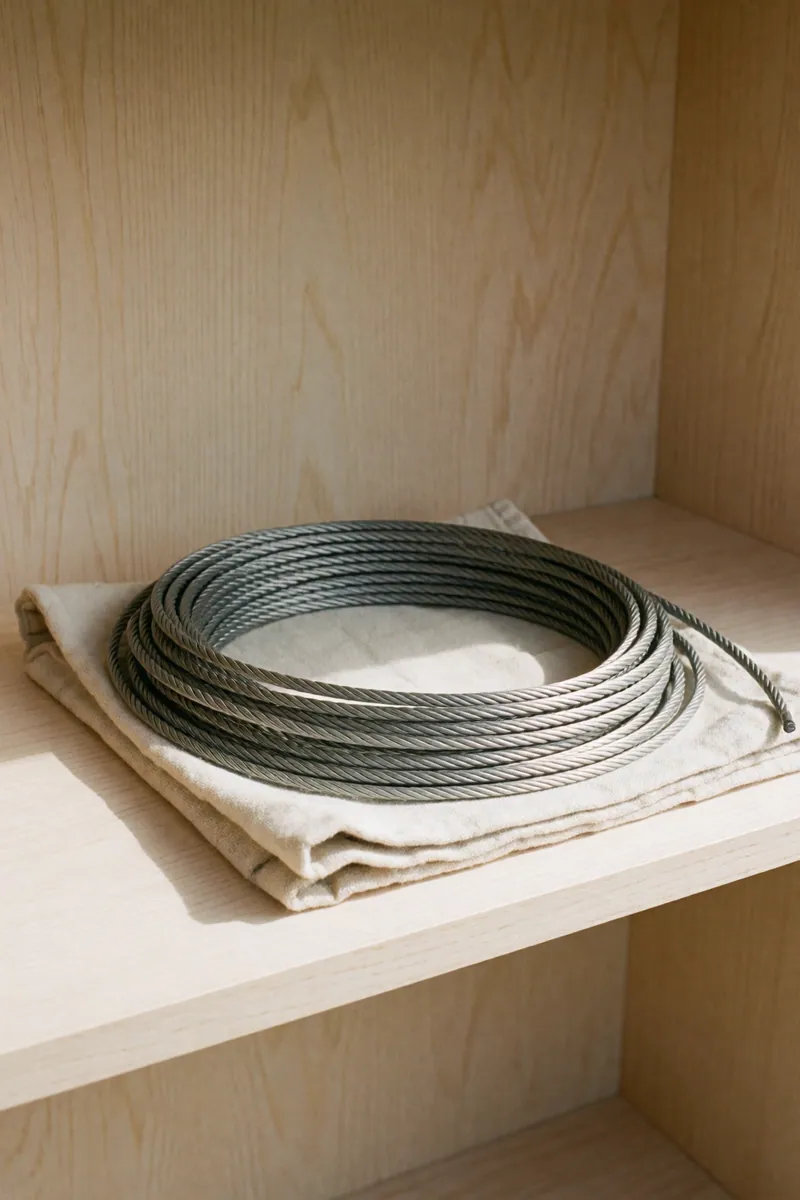
A neat coil of braided steel cable on a folded canvas cloth on a pale wooden shelf.AI-generated illustration. Not a real home or business.

Matteo Szabo-Achebe

Spring and cable technician

Replaces springs and cables and sets doors back on their tracks.

Matteo replaces springs in pairs, so the door does not wait for the other one to go.

Matteo leaves the door closed and the springs at rest whenever he is not working on them.

The picture is a still of the tools, not a portrait.

Once a month

Once a month, the opener's manual asks you to watch the door close all the way and to test that it reverses when it meets something on the floor, such as a roll of paper towels laid flat, but never on a door whose spring or cable might be broken. Keep the sensors' lenses clean and the track clear of anything stored beside it. Everything else, from the springs and cables to the opener's force setting, is a technician's at a tune-up.

What you can check first, if it stops working

Some symptoms come from something an owner can check first without going near a spring or a cable, and the opener's own manual asks you to: a sensor lens with dust on it, a box in the sensors' beam, an opener unplugged, a wall control's lock switched on, a remote's flat battery. The check lists those where they apply, and none for a door it has told you to stop using.

  • Wipe the two sensors' lenses with a soft dry cloth.
  • Move anything standing between the two sensors, even a leaf or a box on the floor between them.
  • If the light still flashes, leave the door closed or open as it is and wait for the visit; don't hold the wall button down to force it.
  • Check that the opener is plugged in and that the breaker for the garage has not tripped.
  • Check that the wall control's lock or vacation switch is off.
  • Put a new battery in the remote.

The line an owner does not cross

A garage door's springs hold the door's weight, and a wound torsion spring holds it under great force. Releasing that force without the right tools and training is how people are badly hurt. That is why the springs, the cables and the brackets at the bottom corners are a technician's work and nobody else's, and why nothing on this site tells anybody how to adjust, unwind or replace them.

A tune-up for a door that works

Every moving part looked at, on a door with nothing wrong with it yet.

  • The balance and the safety test

    Every moving part, the door's balance, and the opener's reversing test, on a door that already works.

  • The springs

    Whether either is broken, and whether the door is balanced once the opener is disconnected by the technician.

  • The lift cables and drums

    Both cables, from the drum at the top to the bracket at the bottom corner, for fraying, slack and how they sit in the grooves.

  • The rollers and hinges

    Worn bearings, cracked wheels, bent stems and loose hinge bolts, section by section.

  • The safety sensors

    Whether the two are lined up, clean and wired, and the reversing test with the opener.

  • The opener's reversing test, as New York requires

    Run by anyone who works on a garage door, its springs or its tracks. If the opener fails it, a DANGER label goes on the opener and you get written notice within ten days.

Every repair has a published price for a one-car door and for a two-car door, and it is the whole price of the job: there is no call-out or visit charge on top. The first visit costs nothing, and you don't have to sign anything after it. Sales tax is worked out line by line.
The pricesOne-car doorTwo-car door
A repair to a house is taxable in New York City, and 8.875% is added to it on its own line.
Adjusting and lubricating, nothing replaced$75$95
A tune-up and safety check$145$165

Check your door

Try the symptom check: what would be looked at first, whether to stop using the door, and the published prices, in about two minutes. Sending it to us books nothing.