About
Questions Queens homeowners ask about a garage door
What a broken spring or a new door costs, what to do when the door stops, what the first visit and the contract involve, and what this company will not take on.
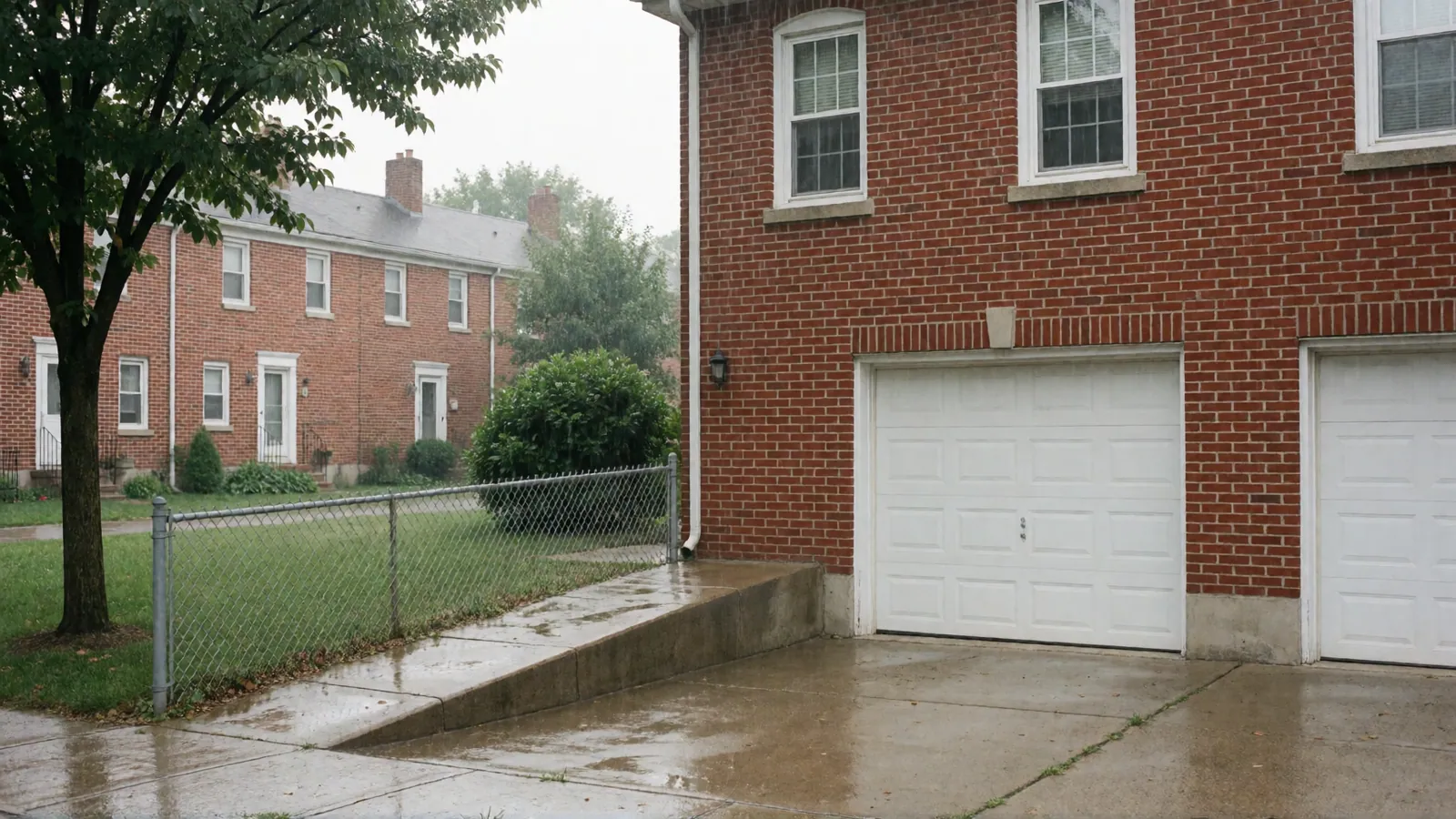
AI-generated illustration. Not a real home or business.
Thirty-six questions, and the site's own answers
Every answer here is word for word the sentence its own page prints, so the two can never drift apart.
How much does a broken garage door spring cost to replace in Queens?
Both torsion springs replaced on a one-car door is $290 to $360, and $360 to $420 on a two-car door; both extension springs, with their safety cables, $195 to $235 and $235 to $275. Sales tax is worked out line by line. A repair to a house is taxable in New York City, and 8.875% is added to it on its own line. A complete new door or a complete new opener installed is a capital improvement: no sales tax is charged on that line when you sign New York's capital improvement certificate, Form ST-124, which you sign and give to the company with the contract.
What does a worked example look like?
For one of the worked examples on the rates page, a one-car door under an attached brick house in Woodside after a loud bang, the symptom check's price range is $175.00 to $535.00 before tax and $190.53 to $582.48 with it, because the springs and the cables are both on the list. Your answers give your own range.
Is the symptom check a diagnosis or an estimate?
The symptom check is not a diagnosis, an inspection, an estimate or a quote, and nothing on this site is an offer. It is a check-first list of what a technician would look at for what you describe, whether to stop using the door until then, and the published prices of what it could turn out to need. Nobody has seen your door: the price is given in writing at the first visit, before anything is done.
Is it safe to use my door?
The check never tells you a door is safe. It has not seen it. It can only tell you when to stop using it, and it does that for every symptom a broken spring or a snapped cable can cause. Stop using the door until it has been looked at. Don't run the opener, don't try to lift the door by hand, and don't pull the opener's red release cord: with a weak or broken spring the door can drop fast. Don't touch the spring, the cables or the brackets at the bottom corners of the door. Keep people, pets and cars out from under it.
My spring broke. What should I do?
Stop using the door until it has been looked at. Don't run the opener, don't try to lift the door by hand, and don't pull the opener's red release cord: with a weak or broken spring the door can drop fast. Don't touch the spring, the cables or the brackets at the bottom corners of the door. Keep people, pets and cars out from under it. A torsion spring that has broken usually shows a gap of a few inches in its coil. You can look for one from the floor; never climb up to it or touch it.
Can I replace a garage door spring myself?
A garage door's springs hold the door's weight, and a wound torsion spring holds it under great force. Releasing that force without the right tools and training is how people are badly hurt. That is why the springs, the cables and the brackets at the bottom corners are a technician's work and nobody else's, and why nothing on this site tells anybody how to adjust, unwind or replace them.
Should I pull the red release cord?
The opener's release cord disconnects the door from the opener. On a door with a broken spring it takes away the only thing holding the door up, so it is never pulled on a door that may have one.
My door is stuck open. What now?
If the door is stuck open, leave it where it is: don't try to close it, and keep everybody and everything out from under it. Say it is open when you send the enquiry, and the office calls you first. New York lets work start at once only in a genuine emergency, such as a door stuck open that leaves the house unsecured, and only if you called the company yourself and you write out, by hand, a dated and signed statement describing the emergency and saying you give up your three days to cancel. Nobody should hand you a printed one, and it covers only the emergency repair, not anything else offered on the same visit. This website can't take that statement and never asks for it.
Why does my door go back up when it closes?
Since 1993, every home garage door opener made for sale in the U.S. has had to reverse within two seconds when it touches something, and to work with a safety device such as the two small sensors near the floor, which it checks every time it closes. That is why an opener refuses to close when a sensor is blocked or out of line, and why we never bypass, bridge or remove the sensors, or turn the force up to make a door close.
My door won't close and the opener light flashes. What can I check?
Some symptoms come from something an owner can check first without going near a spring or a cable, and the opener's own manual asks you to: a sensor lens with dust on it, a box in the sensors' beam, an opener unplugged, a wall control's lock switched on, a remote's flat battery. The check lists those where they apply, and none for a door it has told you to stop using.
Can you make the sensors stop stopping the door?
No. Since 1993, every home garage door opener made for sale in the U.S. has had to reverse within two seconds when it touches something, and to work with a safety device such as the two small sensors near the floor, which it checks every time it closes. That is why an opener refuses to close when a sensor is blocked or out of line, and why we never bypass, bridge or remove the sensors, or turn the force up to make a door close.
Is my old opener still all right?
An opener made before 1993 was not built with the second means of protection the federal rule now requires, such as the sensors near the floor, and many no longer reverse. In New York an opener that doesn't reverse may be serviced only if the service makes it reverse, and one without a sensor could not be installed today. It is priced here for replacing. New York's own law on garage door openers binds anyone who works on a garage door, its springs or its tracks: they test on site that the opener reverses, and if it fails they fix the law's DANGER label to it and give the owner written notice within ten days. Nobody may install an opener on a home without an automatic reverse and a safety sensor.
Do you charge for the first visit?
The first visit costs nothing, and you don't have to sign anything after it: the door is looked at from the floor and tested, its balance and the opener's reversing test, which New York requires of anyone who works on a garage door, and you get a written price for the repair from the published prices. There is no service-call charge to start with and no low price that grows at the door. The first visit costs nothing, and you don't have to sign anything after it; every price on this site is the whole price of the job; and New York City forbids extra charges used to disguise a selling price.
Can you fix it today?
There is no twenty-four-hour service, no same-day repair and no arrival time in minutes. In New York City a repair waits for the three business days to cancel, unless it is a genuine emergency and you write the statement the law asks for, and the office agrees a working day for the first visit with you. If the door is stuck open, say so in the enquiry, and the office calls you first. New York lets work start at once only in a genuine emergency, such as a door stuck open that leaves the house unsecured, and only if you called the company yourself and you write out, by hand, a dated and signed statement describing the emergency and saying you give up your three days to cancel. Nobody should hand you a printed one, and it covers only the emergency repair, not anything else offered on the same visit. This website can't take that statement and never asks for it.
What happens at the first visit?
A first visit takes about an hour: the door and its parts looked at, the balance tested with the opener disconnected by the technician, the opener's reversing test run, and a written price for the repair. Before any repair you get its price in writing and a written contract to sign. Nothing is done until you say yes and the three business days to cancel are over.
Is the first visit an inspection?
The first visit is never called an inspection: in New York a home inspection is a licensed activity, and its definition names garages. A technician looks at a door in order to price a repair, and says so.
What goes in the contract?
In New York City every repair or installation at a house is a home improvement contract, whatever its price: written and signed before any work, with the license number, the work, the parts by make and model, the price, the dates, the payment terms, the notices the law requires, and a signed notice saying whether any permit is needed. Every New York home improvement contract carries a notice, in bold, that a contractor, subcontractor or supplier who is not paid may have a claim against your property called a mechanic's lien, and that you may ask a lawyer how to discharge one.
Can I cancel after I sign?
You can cancel the contract until midnight of the third business day after the day you sign it, or after the day you receive the notice of your right to cancel if that is later, wherever you sign it, owing nothing: tell us in writing before that midnight, by letter to the office or by e-mail; a letter counts on the day it is mailed. In New York City no work is done and nothing at your home is changed until those days are over. For cancelling, a business day is every day except Sunday and the holidays. New York's law names nine: New Year's Day, Washington's Birthday, Memorial Day, Independence Day, Labor Day, Columbus Day, Veterans Day, Thanksgiving and Christmas Day. The federal rule leaves out every federal holiday, which adds Martin Luther King Jr. Day and Juneteenth, and this company counts by both, so none of the eleven is a business day. The technicians work on those same business days.
Do you take a deposit?
Nothing is paid on this website, and there is no deposit. A repair is paid when it is done and tested; a new door or opener after it is installed and works. Check or bank transfer; we don't take cash or cards. If a contractor does take money before a job is substantially finished, New York law says it is still yours: it goes into an escrow account at a bank in New York within five business days, and you are told which bank, unless the contractor posts a bond instead.
Is sales tax added?
Sales tax is worked out line by line. A repair to a house is taxable in New York City, and 8.875% is added to it on its own line. A complete new door or a complete new opener installed is a capital improvement: no sales tax is charged on that line when you sign New York's capital improvement certificate, Form ST-124, which you sign and give to the company with the contract.
How much is a new garage door?
A new insulated steel sectional door, installed, the old one taken away, is $1,650 to $1,950 for a one-car door and $2,350 to $2,750 for a two-car door. A new door is measured first: the opening, the headroom above it, the room at the sides and back to the wall, and the frame it fixes to. The measuring visit costs nothing, and you don't have to sign anything after it. A complete new door or a complete new opener installed is a capital improvement: no sales tax is charged on that line when you sign New York's capital improvement certificate, Form ST-124, which you sign and give to the company with the contract.
How much is a new opener?
A new ceiling opener with a belt rail, installed, is $625; a wall-mounted opener beside the door, $950. A new opener plugs into an outlet near where it is mounted, on the ceiling for a rail opener or on the wall beside the door for a wall one, never into an extension cord. If there isn't one, a licensed electrician adds it before the opener goes up: that is electrical work, with its own permit, and this company does not do it.
Do I need a permit for a new garage door?
Replacing a garage door in the same opening needs no Buildings permit. Widening an opening or building a garage does, and that is not something this company takes on. Every New York City contract comes with a signed notice saying whether any permit is needed. New York City's Building Code requires a garage door to be tested for the wind it will face; a new door's maker states its rating, and the contract names the door by make and model.
How long does a new door take?
A new door is made to its size and usually arrives two to four weeks after the contract is signed and the three days are over. It is installed in a day, the old door and its springs taken away the same day.
Why are springs replaced in pairs?
Two springs on a door age together, so when one breaks the other is near its end too. Replacing both keeps the door balanced and spares you a second visit for the second spring.
What can I do myself to look after the door?
Once a month, the opener's manual asks you to watch the door close all the way and to test that it reverses when it meets something on the floor, such as a roll of paper towels laid flat, but never on a door whose spring or cable might be broken. Keep the sensors' lenses clean and the track clear of anything stored beside it. Everything else, from the springs and cables to the opener's force setting, is a technician's at a tune-up.
Which openers and doors do you use?
Ceiling openers with a belt rail or wall-mounted openers beside the door, and insulated steel sectional doors, chosen at the measuring visit for the garage. No maker is named on this site; the contract names the make and model of each.
Do you work on one-piece or swing doors?
A one-piece door that tilts up and out is hung on springs and pivots that differ from door to door, and many of them are old. We see those first, on the same terms as every first visit. Their parts are not on our published prices, so we don't repair them: what we can price in writing is a new sectional door in the opening. Doors that swing open like gates have no springs or tracks: their hinges, posts and wood are carpentry, which we don't take on. We see those first, to price a sectional door in their place.
Do you do commercial doors or roll-down gates?
We work on homes. Shop doors, loading doors and roll-down security gates are commercial work with their own rules, and not something this company takes on. A steel curtain that rolls into a drum over the opening is a rolling door, usually a shop's, with its own springs inside the drum. It is not something this company works on.
I rent. Can I ask you to fix the door?
Only the owner can contract for work on the house. If you rent, show this check to your landlord, and in the meantime follow what it says about using the door.
Are you licensed?
Railwick Garage Doors is a fictional company on a demonstration site. In New York City, repairing or replacing a garage door, its springs and cables, or its opener at a house of up to four homes is home improvement work, and takes a Home Improvement Contractor license from the Department of Consumer and Worker Protection, whose number appears in every advertisement. This company holds none, so no number appears here. It is not an electrician and does no electrical work. Before you let anybody work on your door, ask for its Home Improvement Contractor license number and check it on the Department of Consumer and Worker Protection's license search, and ask for the written price before the work.
Are you insured?
This company has no insurance, no bond and no workers' compensation policy, because it does not exist. A real contractor can show you its certificates, and where an ad says insured or bonded, New York City asks it to say what kind.
Is there a warranty?
We promise what is in writing: the work, the parts, the price and the dates. We don't offer a warranty of our own, a lifetime anything or a guarantee of satisfaction. Springs, openers and doors carry their makers' warranties, whose terms the makers write. A real contractor's paperwork should keep two promises apart: the maker's warranty on a part, written by the maker, and the contractor's own promise about its work. In New York City a contractor who advertises a guarantee must put its terms in the ad and in the contract, and may not offer a lifetime one; a spring sold as "lifetime" is a promise about the part, from its maker, if anyone.
Do you give discounts?
There is no sale price, no percentage off, no coupon, no spring special and no price match here, because a price cut from a price nobody ever paid is not allowed in New York City advertising, and this company has no earlier price to cut from. Every customer pays the published price.
Which days do you work?
Technicians visit from 8 am to 5 pm, Monday to Saturday. There is no night or Sunday service, and no promise of an arrival time: the office gives you a window when it books the visit. No visit or install is done on a Sunday or on a federal holiday: New Year's Day, Martin Luther King Jr. Day, Washington's Birthday, Memorial Day, Juneteenth, Independence Day, Labor Day, Columbus Day, Veterans Day, Thanksgiving or Christmas Day, or the day any of them is observed.
Where do you work?
We work in Queens: Woodside and the neighborhoods next to it, and the rest of the borough. We don't take work in the other boroughs or outside the city.
Where the answers come from
Check your door
Try the symptom check: what would be looked at first, whether to stop using the door, and the published prices, in about two minutes. Sending it to us books nothing.