What we will not claim
An opener that reverses is doing its job. The sensors stay.
Why an opener that goes back up is doing what the law asks of it, and why nobody here makes it stop.
AI-generated illustration. Not a real home or business.
What you will see advertised
“Door won't close? We can bypass the sensors so it closes every time.”
Quoted in order to be refused: this company never says it, and the rest of this page says why.
Every home opener made for sale in the U.S. since 1993 must reverse when it meets something and work with a second safety device; in New York nobody may install one without a sensor, nobody may repair one that does not reverse except to make it reverse, and anyone working on a door tests the opener and labels one that fails. So nobody here bypasses, bridges or removes a sensor, and an opener that cannot be made to reverse is priced for replacing.
What the rules say
Each read against its source in October 2026.
- Automatic residential garage door operators made for sale in the United States must reverse a closing door within two seconds of meeting an obstruction, with a further means of protection such as photoelectric sensors (16 CFR 1211).
- No one may service or repair a garage door opener that does not reverse unless the service brings it into compliance, and anyone servicing the door, its springs or tracks tests the opener on site, labels one that fails, and gives the owner written notice within ten days (GBL § 391-k).
- Since January 1, 1993 no one may install an opener on a residential building without an edge sensor, an optical sensor or a similar entrapment protection device, and anyone who services one without such a device warns the owner in writing within ten days (GBL § 391-k(3)).
The sources, to read in full:
What we say instead
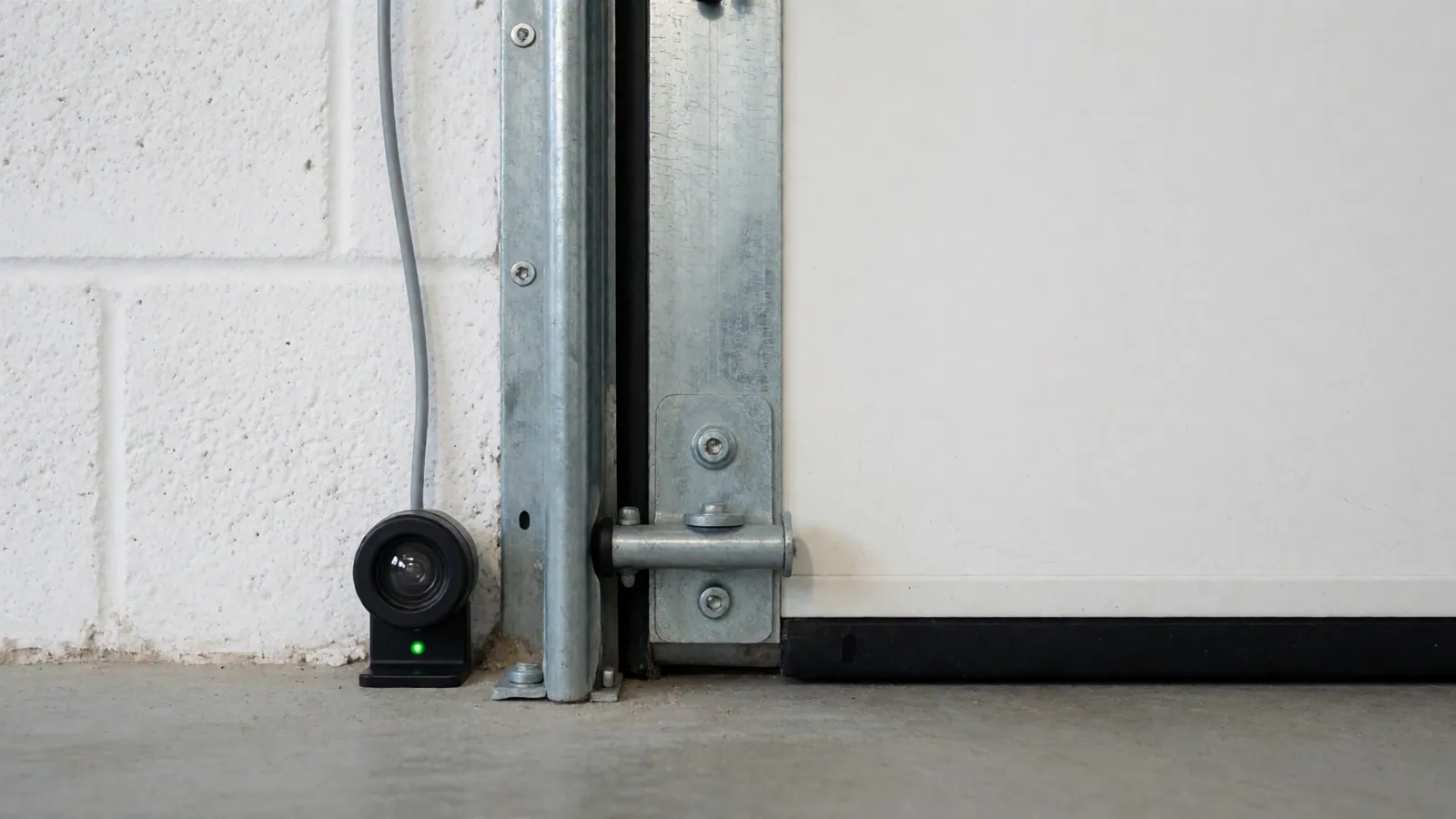
Since 1993, every home garage door opener made for sale in the U.S. has had to reverse within two seconds when it touches something, and to work with a safety device such as the two small sensors near the floor, which it checks every time it closes. That is why an opener refuses to close when a sensor is blocked or out of line, and why we never bypass, bridge or remove the sensors, or turn the force up to make a door close.
New York's own law on garage door openers binds anyone who works on a garage door, its springs or its tracks: they test on site that the opener reverses, and if it fails they fix the law's DANGER label to it and give the owner written notice within ten days. Nobody may install an opener on a home without an automatic reverse and a safety sensor.
New York has required openers installed on homes to have a safety sensor since 1993, and anyone who services an opener without one must warn the owner in writing within ten days. Here that is a replacement price, not a repair.
- We do not bypass, bridge or remove an opener's safety sensors, or turn the force up to make a door close.
Why garage door sites say it, and why it doesn't hold
A door that starts down and goes back up, again and again, is maddening, especially with a car to get in and somewhere to be. A company that offers to make it close without any fuss sounds like the one that listens.
The rules above explain why it goes back up. Every home opener made for sale in this country since the federal rule took effect has to reverse when it meets something and has to work with a second means of protection, such as the pair of small sensors by the floor; in New York nobody may install one without that protection, and nobody may repair one that does not reverse except by making it reverse. A door that closes whatever is under it is the thing all three rules are written against, and the people it fails are the small ones and the ones on four legs, who do not look up.
What a garage door company can honestly say, and do
What a company can honestly offer is the short list of things an owner can try first, none of them near a spring, a cable or the opener's settings. These are the ones for a door that will not close:
- Wipe the two sensors' lenses with a soft dry cloth.
- Move anything standing between the two sensors, even a leaf or a box on the floor between them.
- If the light still flashes, leave the door closed or open as it is and wait for the visit; don't hold the wall button down to force it.
And it can say plainly what happens when the reverse itself has failed, because that changes what the opener's line in the price is:
An opener that doesn't reverse can't lawfully be repaired in New York unless the repair makes it reverse, so the price range includes replacing it. Until it is seen, don't use the opener.
What to ask any garage door company
Ask them of anybody who comes to look at your door, this company included. A plain answer tells you something, and so does a vague one.
- Will you run the reversing test before you leave, with me watching?
- If my opener fails the test, what happens to it, and what do you give me in writing?
- What did you change to make the door close, and does it still reverse?
- Does my opener have the second means of protection the federal rule asks for?
- If the opener has to be replaced, what is the price, and is it written down?
Check your door
Try the symptom check: what would be looked at first, whether to stop using the door, and the published prices, in about two minutes. Sending it to us books nothing.