$225 to $365 for a one-car door
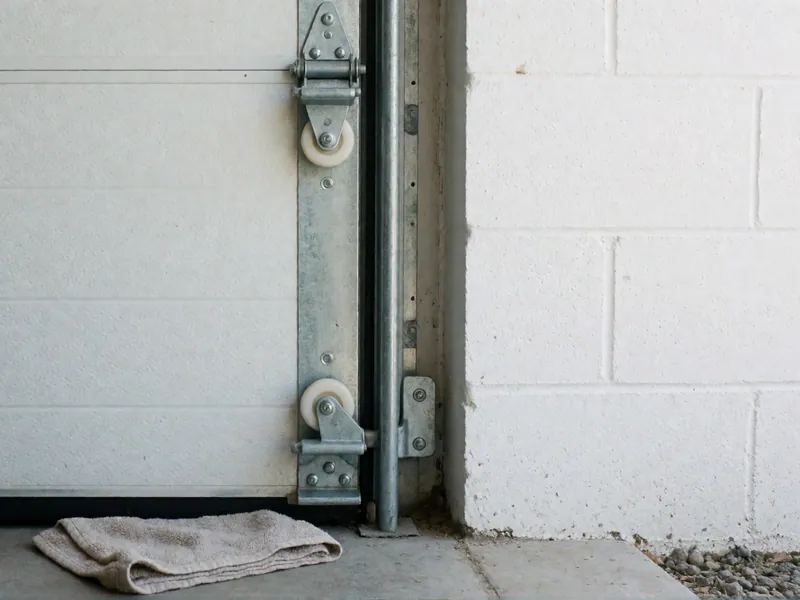
Garage door off track
A crooked door or one that has jumped its track, set back on straightened tracks with its rollers and cables checked, at a published price.
The first visit costs nothing, and you don't have to sign anything after it.
If someone is trapped or hurt, call 911. This website is not an emergency service.
37-32 61st Street, Woodside, NY 11377
Seen first
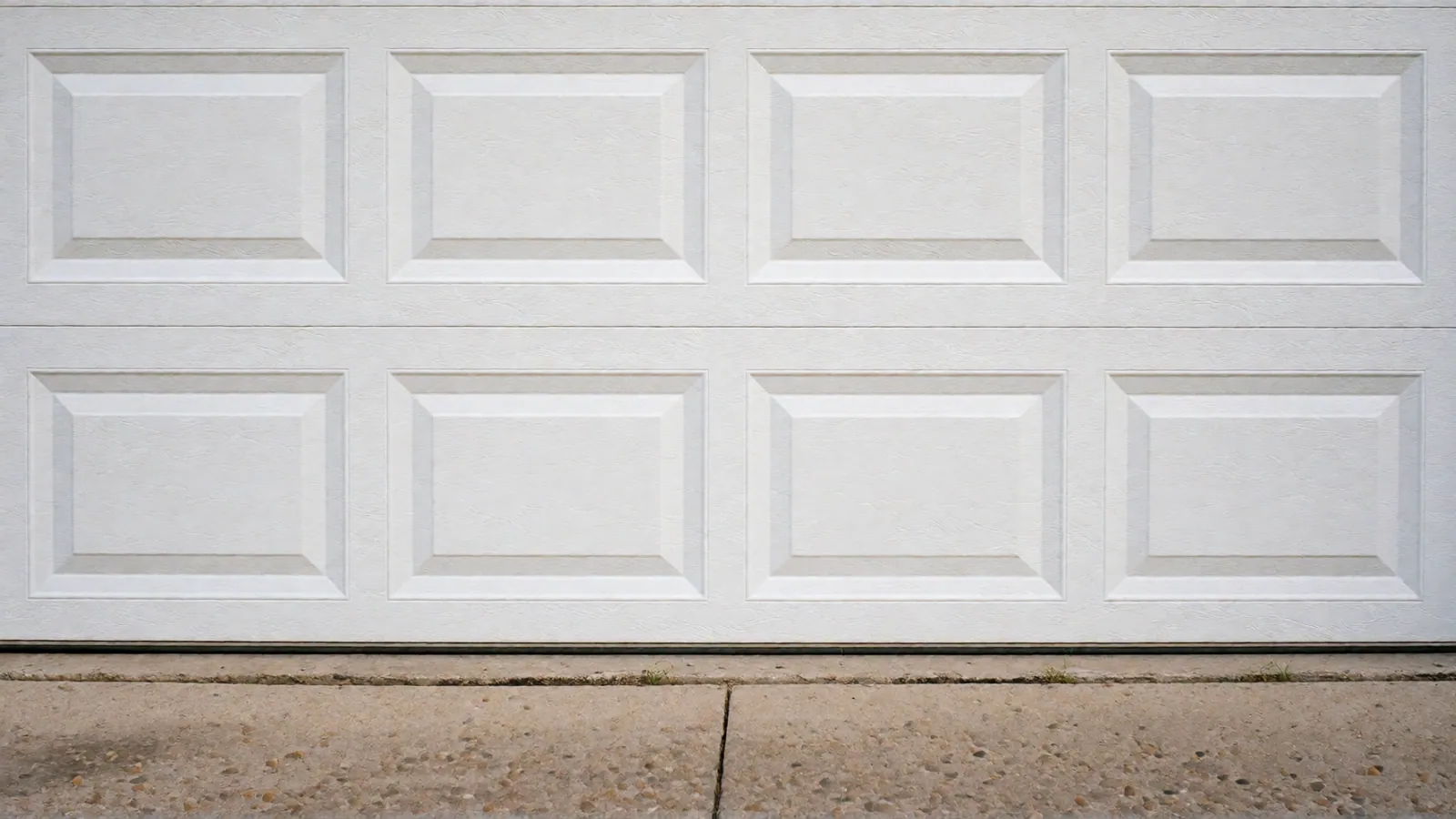
A section bent by a car or cracked with age, replaced where a match can be had, or a new door when it cannot.
AI-generated illustration. Not a real home or business.
Nothing you've told us is on the list of symptoms that stop a door. Until the visit, watch the door all the way every time it moves and keep out from under it while it does, and stop using it if it gets worse or you hear a bang. Test once a month that it reverses, as your opener's manual says, but never on a door whose spring or cable might be broken.
A dent that only marks the face of a section is a matter of looks. One that bends the section, or cracks it along a hinge line, changes how the door moves.
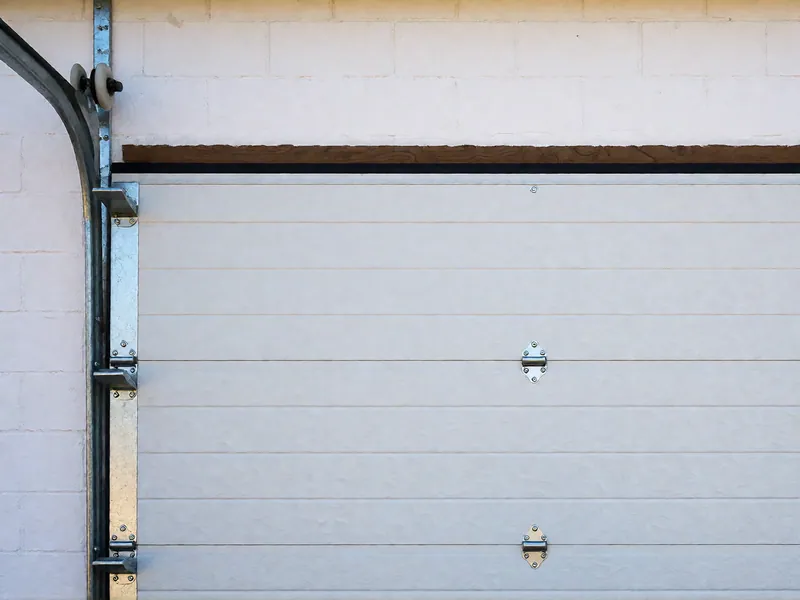
A sectional door is a chain of panels hinged together, rounding the curve at the top of the tracks every time it opens. A section bent by a bumper no longer lies flat against its neighbors, so it can bind at the curve, strain the hinges between them and pull a roller out of line.
For "A section is bent, cracked or dented", the symptom check answers "Use it with care until the visit" and lists what a technician looks at, in this order:
Bends, cracks and the joints between them, and whether the door binds where a section is bent.
Worn bearings, cracked wheels, bent stems and loose hinge bolts, section by section.
Whether both are straight, upright and bolted tight, and the rollers sit in them all the way up.
Run by anyone who works on a garage door, its springs or its tracks. If the opener fails it, a DANGER label goes on the opener and you get written notice within ten days.
A section is made for one door: its width, its height, the pattern pressed into its face, its color, its thickness and its insulation. A new one has to agree with the sections above and below it on every count, or it will not hinge to them properly, and it will look like what it is.
On a door that is still made, a matching section can usually be had. On an older door, or one whose pattern is no longer made, often it cannot, and then the choice is between a dent that is lived with and a new door.
Which it is, is found out at the visit, before anything is written down.
The table holds every line the symptom check can list for it, each at its published price for a one-car and a two-car door. The range the check gives runs from the least of them to all of them, because a door can need more than one at once.
| The prices | One-car door | Two-car door |
|---|---|---|
| A repair to a house is taxable in New York City, and 8.875% is added to it on its own line. | ||
| Bent or cracked hinges replaced | $95 to $165 | $95 to $195 |
| One damaged section replaced, where a match can be had | $475 | $650 |
A price covers the parts and the work, the old parts taken away, and the balance and the reversing test run again before the technician leaves. It does not cover electrical work, such as a new outlet for an opener, which a licensed electrician does.
$225 to $365 for a one-car door
A crooked door or one that has jumped its track, set back on straightened tracks with its rollers and cables checked, at a published price.
$1,650 to $1,950 for a one-car door
An insulated steel sectional door made to the opening, measured first, the old door and its springs taken away on the day.
$145 for a one-car door
Every moving part looked at, the balance tested, the hinges and rollers lubricated, and the opener's reversing test run, at a published price.
Try the symptom check: what would be looked at first, whether to stop using the door, and the published prices, in about two minutes. Sending it to us books nothing.