The first visit costs nothing, and you don't have to sign anything after it.
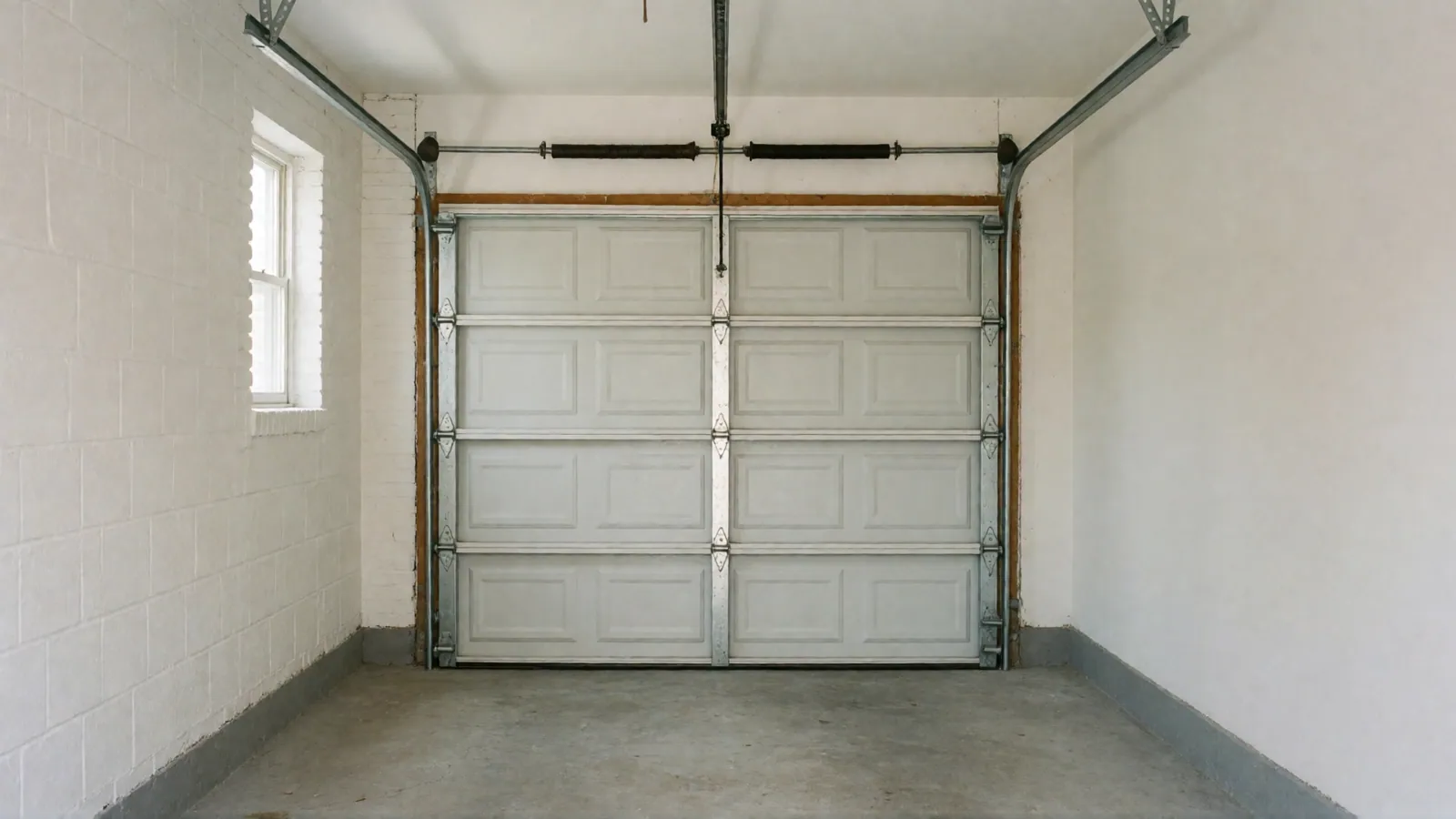
Inside an empty single garage with white block walls: a closed white raised-panel sectional door and, on a steel tube across the wall above it, two dark torsion springs, the tracks curving back under the ceiling, a rope and red handle hanging from the opener's rail at the middle.

Repairs

A broken spring, replaced in pairs, by a technician only

A torsion spring above the door or extension springs along the sides, replaced in pairs at a published price, and the door balanced again.

  • $290 to $360 for a one-car door
  • Stop using the door until it is seen
  • Queens only

AI-generated illustration. Not a real home or business.

If a spring has just gone

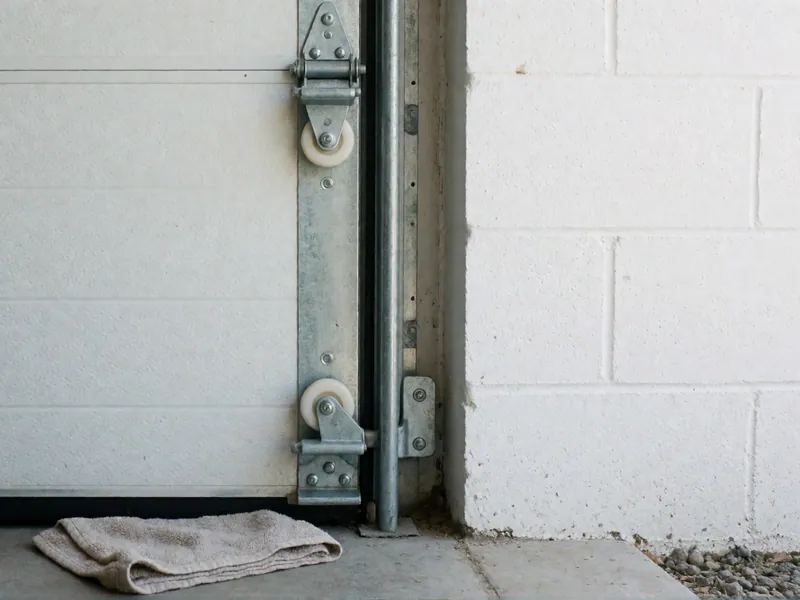
Stop using the door until it has been looked at. Don't run the opener, don't try to lift the door by hand, and don't pull the opener's red release cord: with a weak or broken spring the door can drop fast. Don't touch the spring, the cables or the brackets at the bottom corners of the door. Keep people, pets and cars out from under it.

The sound is the giveaway. A torsion spring that breaks lets go of its force at once, and the bang can be loud enough to sound like something hitting the house. Afterward the door is suddenly far heavier than it was, because the spring that carried its weight no longer does.

The opener may still try. It is built to move a door the springs have balanced, not to lift one, and a door that will not rise, or rises a little and stops, is often the opener meeting the weight the spring used to hold.

  • Replaced in pairs.
  • Never a job for an owner.

What holds the door up

A garage door is heavy, and the springs carry its weight. Balanced against them, the door moves as if it weighed little, and the opener only has to move it.

  • Torsion springs

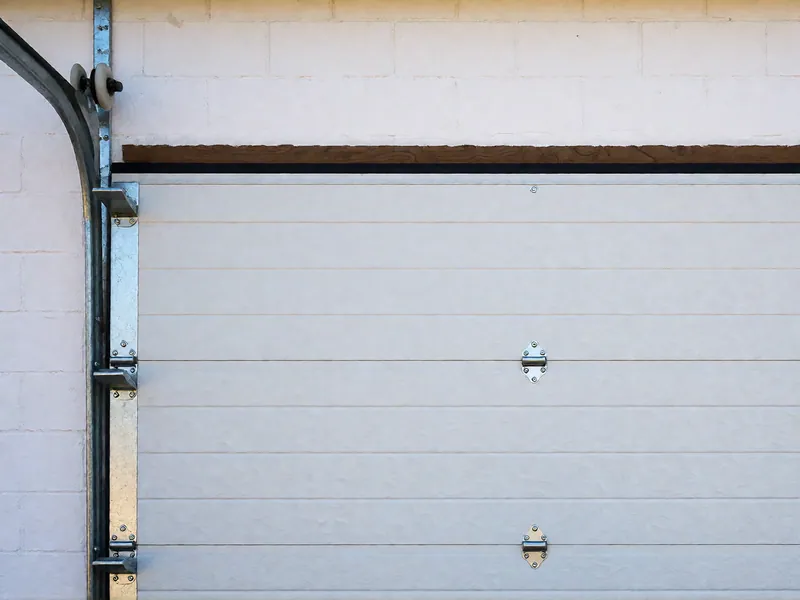
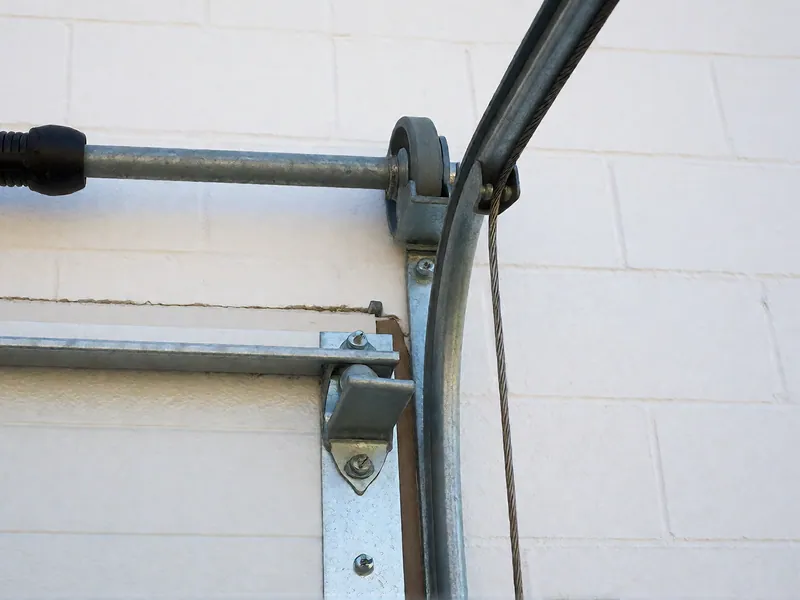
    On a bar across the wall just above the door. The springs are wrapped around a steel tube, with a drum at each end that the lift cables run onto. Closing the door twists them tighter; opening it lets them turn the tube and lift the door.

  • Extension springs

    Stretched along each side, above the tracks. One along each side, stretched as the door comes down and pulling it up as it opens, through cables and pulleys. A safety cable runs through each one, to hold the pieces if a spring breaks.

Which kind your door has can be told without going near either. Look from the floor, with the door closed. Don't climb up to them or touch them.

A torsion spring that has broken usually shows a gap of a few inches in its coil. You can look for one from the floor; never climb up to it or touch it.

A garage door's springs hold the door's weight, and a wound torsion spring holds it under great force. Releasing that force without the right tools and training is how people are badly hurt. That is why the springs, the cables and the brackets at the bottom corners are a technician's work and nobody else's, and why nothing on this site tells anybody how to adjust, unwind or replace them.

Why both are replaced

Two springs on a door age together, so when one breaks the other is near its end too. Replacing both keeps the door balanced and spares you a second visit for the second spring.

On a door with extension springs it is the same for the two sides: a new spring beside a tired one pulls harder than the old one does, and the door rises unevenly.

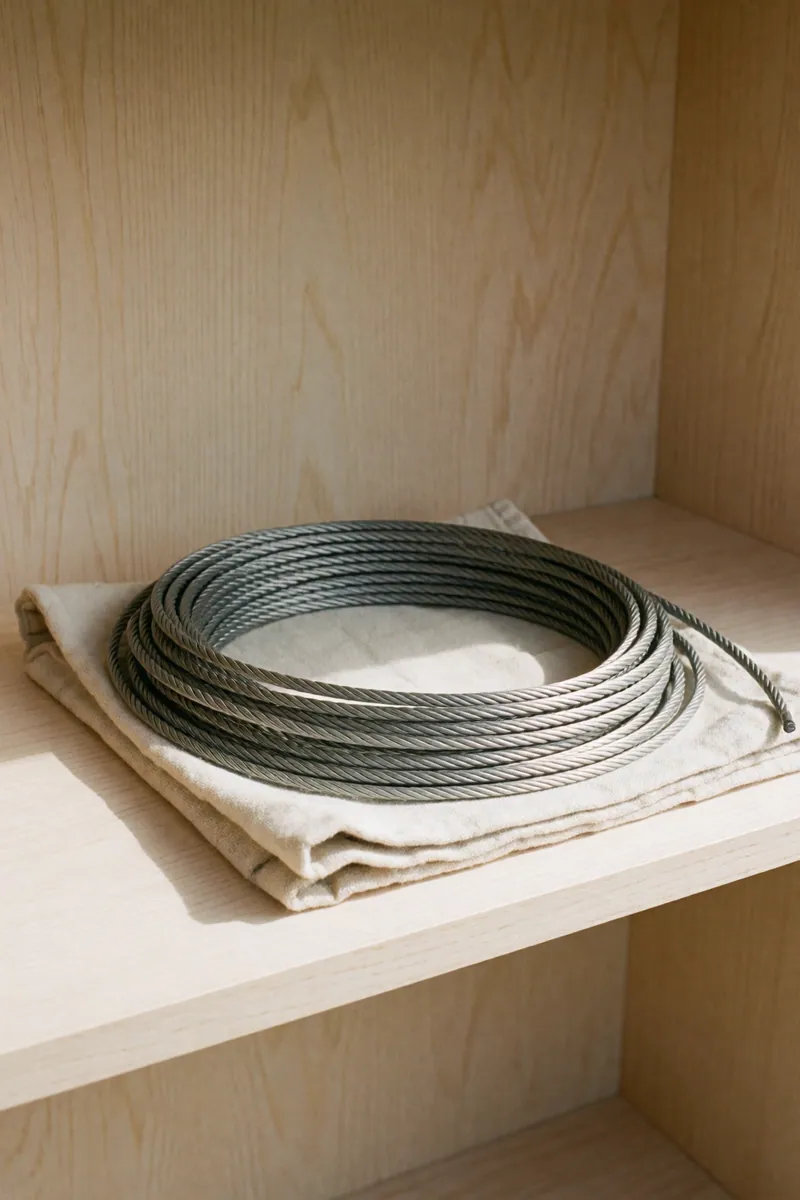
A neat coil of braided steel cable on a folded canvas cloth on a pale wooden shelf.AI-generated illustration. Not a real home or business.

Matteo Szabo-Achebe

Spring and cable technician

Replaces springs and cables and sets doors back on their tracks.

Matteo replaces springs in pairs, so the door does not wait for the other one to go.

Matteo leaves the door closed and the springs at rest whenever he is not working on them.

The picture is a still of the tools, not a portrait.
Why the release cord stays where it is

The opener's release cord disconnects the door from the opener. On a door with a broken spring it takes away the only thing holding the door up, so it is never pulled on a door that may have one.

The cord is there so that a door can be moved without the opener. After a bang it looks like the way to get the car out, which is exactly when it is left alone.

The visit, the price and the repair

For "There was a loud bang, and now the door won't lift or the opener struggles", the symptom check answers "Stop using the door until it is seen" and lists what a technician looks at, in this order:

  • The springs

    Whether either is broken, and whether the door is balanced once the opener is disconnected by the technician.

  • The lift cables and drums

    Both cables, from the drum at the top to the bracket at the bottom corner, for fraying, slack and how they sit in the grooves.

  • The tracks

    Whether both are straight, upright and bolted tight, and the rollers sit in them all the way up.

  • The opener's settings

    Its travel limits and its force setting, and the reversing test on something placed under the door.

  • The opener's reversing test, as New York requires

    Run by anyone who works on a garage door, its springs or its tracks. If the opener fails it, a DANGER label goes on the opener and you get written notice within ten days.

Before any repair you get its price in writing and a written contract to sign. Nothing is done until you say yes and the three business days to cancel are over.

Both kinds of spring are priced here, each pair on its own line, for a one-car and a two-car door.

Every repair has a published price for a one-car door and for a two-car door, and it is the whole price of the job: there is no call-out or visit charge on top. The first visit costs nothing, and you don't have to sign anything after it. Sales tax is worked out line by line.
The pricesOne-car doorTwo-car door
A repair to a house is taxable in New York City, and 8.875% is added to it on its own line.
Both torsion springs replaced$290 to $360$360 to $420
Both extension springs replaced, with their safety cables$195 to $235$235 to $275

A price covers the parts and the work, the old parts taken away, and the balance and the reversing test run again before the technician leaves. It does not cover electrical work, such as a new outlet for an opener, which a licensed electrician does.

Related services

Check your door

Try the symptom check: what would be looked at first, whether to stop using the door, and the published prices, in about two minutes. Sending it to us books nothing.