The first visit costs nothing, and you don't have to sign anything after it.
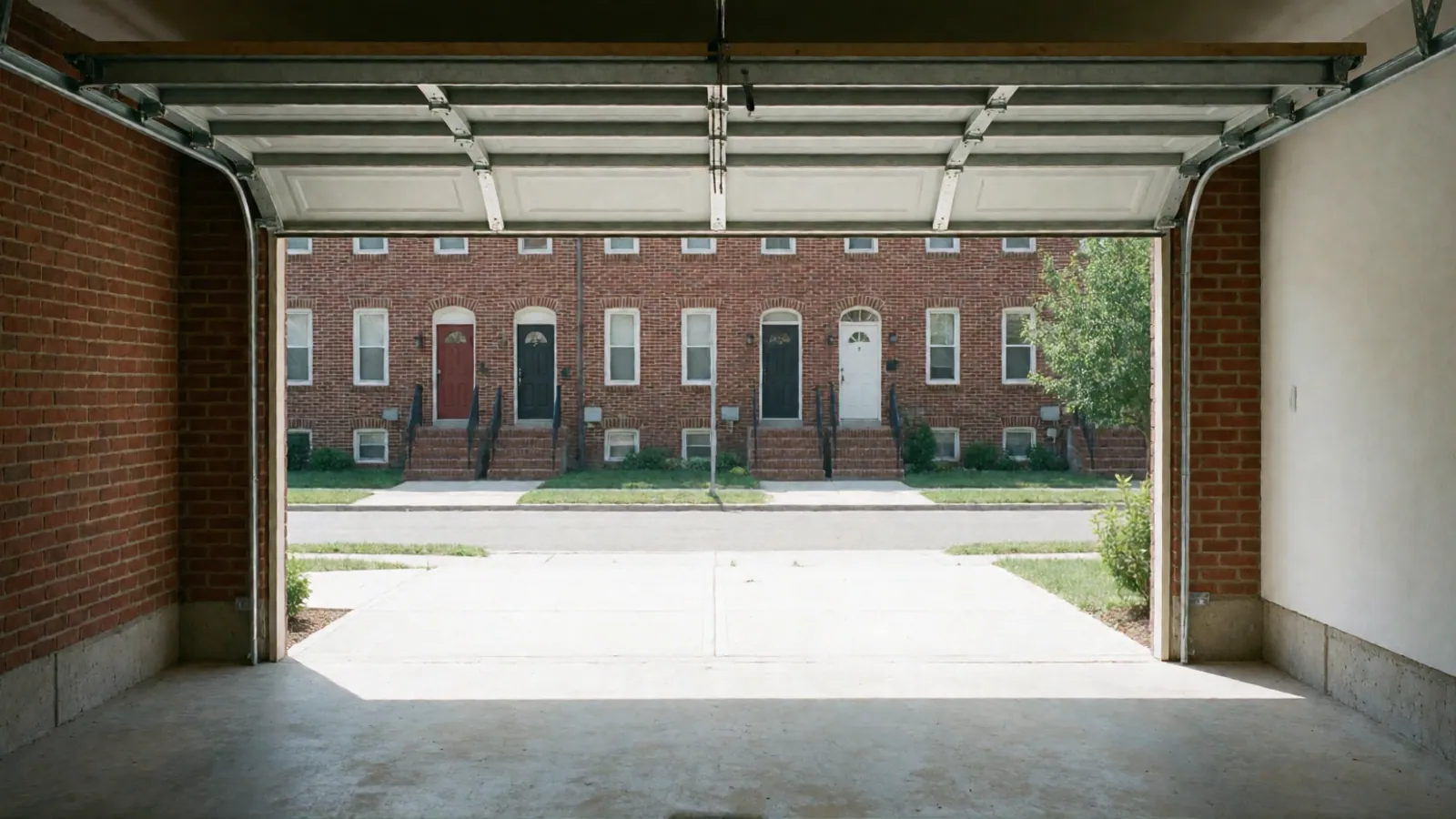
From inside an empty garage with brick and white walls, the white sectional door raised overhead on its tracks, daylight falling across the concrete floor, a driveway and a row of red-brick houses with stoops across the street outside.

New doors and openers

A new opener on a door that is balanced first

A ceiling opener with a belt rail, or one on the wall beside the door, fitted to a door that is balanced, with its sensors set.

  • $625
  • Queens only

AI-generated illustration. Not a real home or business.

On a balanced door only

An opener does not lift a garage door. The springs do that, and the opener moves a door they already balance. Fitted to a door whose springs no longer match it, an opener strains at every lift and wears its drive early.

So the door is looked at before an opener goes on it: its springs, its cables, its tracks and its balance.

An opener only moves a door; the springs carry its weight. A new opener goes on a door that is balanced, and the visit that measures for it tests the balance first. If the door isn't balanced, that is a spring repair with its own written price and its own contract, done before the opener goes up.

  • On a balanced door only.
  • The outlet is an electrician's.
A small stack of plain galvanized steel hinges on a folded canvas cloth on a weathered wooden workbench outdoors.AI-generated illustration. Not a real home or business.

Tomasz Okonjo-Reyes

Install crew lead

Leads the crew that takes old doors away and puts new ones in.

Tomasz checks the new door's balance with the springs set before the opener is connected.

Tomasz leaves the garage swept, with the old door already on the truck.

The picture is a still of the tools, not a portrait.
On the ceiling, or on the wall

  • On the ceiling, with a rail to the door

    The motor hangs from the ceiling in the middle of the garage, and a belt runs along a rail to a carriage that pulls the door by its top section. It is the usual kind, and it needs room above the door for the rail.

  • On the wall beside the door, with no rail

    The motor sits on the wall at one side of the opening and drives the door from there, so nothing hangs from the ceiling. It suits a garage with little room above the door, or one whose ceiling is used for storage, and its published price is the higher of the two.

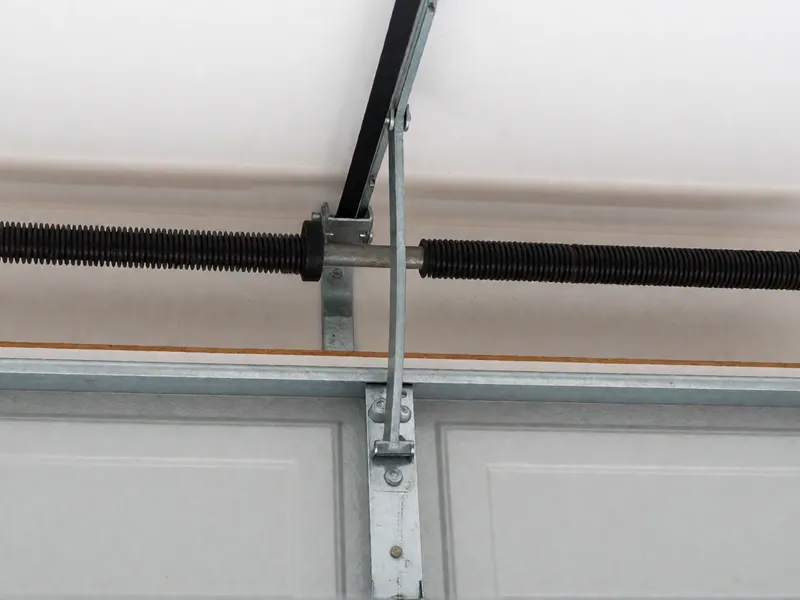
A wall-mounted opener sits beside the door and turns the bar the torsion springs are wound on, so it is fitted only to a door with torsion springs. On a door with extension springs the ceiling opener is the one priced, and where you couldn't say which springs a door has, both are priced and the visit decides.

Ceiling openers with a belt rail or wall-mounted openers beside the door, and insulated steel sectional doors, chosen at the measuring visit for the garage. No maker is named on this site; the contract names the make and model of each.

The outlet comes first

A new opener plugs into an outlet near where it is mounted, on the ceiling for a rail opener or on the wall beside the door for a wall one, never into an extension cord. If there isn't one, a licensed electrician adds it before the opener goes up: that is electrical work, with its own permit, and this company does not do it.

Plenty of older garages have a light on the ceiling and no outlet anywhere near where an opener would go. That is found out before the opener is ordered, not on the day.

The sensors, set and tested

Since 1993, every home garage door opener made for sale in the U.S. has had to reverse within two seconds when it touches something, and to work with a safety device such as the two small sensors near the floor, which it checks every time it closes. That is why an opener refuses to close when a sensor is blocked or out of line, and why we never bypass, bridge or remove the sensors, or turn the force up to make a door close.

A new opener comes with its pair of sensors. Hung, connected, and its sensors set; the reversing test is run with you watching.

The price, and the sales tax

A new opener installed is one line, at the same published price for a one-car and a two-car door.

Every repair has a published price for a one-car door and for a two-car door, and it is the whole price of the job: there is no call-out or visit charge on top. The first visit costs nothing, and you don't have to sign anything after it. Sales tax is worked out line by line.
The pricesOne-car doorTwo-car door
A complete new door or a complete new opener installed is a capital improvement: no sales tax is charged on that line when you sign New York's capital improvement certificate, Form ST-124, which you sign and give to the company with the contract.
A new ceiling opener with a belt rail, installed$625$625
A new wall-mounted opener, installed$950$950

A repair to a house is taxable in New York City, and 8.875% is added to it on its own line.

A price covers the parts and the work, the old parts taken away, and the balance and the reversing test run again before the technician leaves. It does not cover electrical work, such as a new outlet for an opener, which a licensed electrician does.

Related services

Check your door

Try the symptom check: what would be looked at first, whether to stop using the door, and the published prices, in about two minutes. Sending it to us books nothing.